


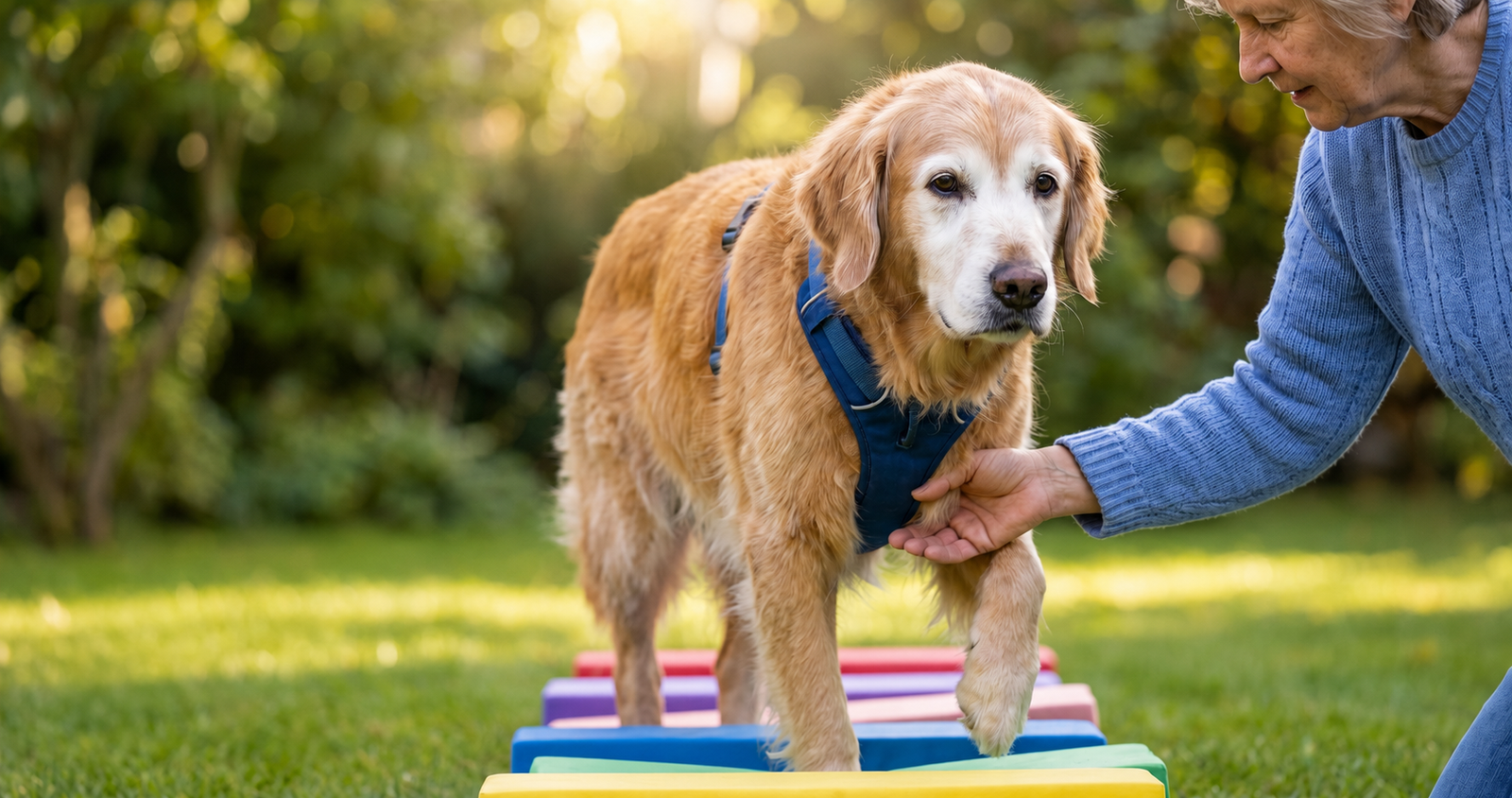
Weak hind legs are one of the most common and most distressing changes owners see in aging dogs. The good news is that in many cases, you can slow it down and even rebuild some of that lost strength at home. Muscle responds to use at any age. This guide covers exactly how to do it safely, which exercises actually work, and the one thing you must do before you start.
The Essentials First
- Sit-to-stand repetitions, 5 reps twice daily, the most important exercise
- Short slow leash walks on flat, even ground, several times a day
- Gentle balance work on a cushion or folded towel
- Controlled hill walking on a very gentle incline
- Weight shifting and standing holds to build stability
- Hydrotherapy or swimming for zero-impact resistance
- Paraspinal and hind leg massage to improve blood flow
Why Senior Dogs Lose Hind Leg Strength
Hind leg weakness is not a single condition. It is a symptom with several possible causes, and they often overlap.
The most common driver is simple muscle loss. As dogs age, they lose muscle mass through a process called sarcopenia, the same age-related muscle wasting that affects older humans. The hindquarters, which do most of the work of standing and pushing off, are usually hit first.
Pain accelerates this. A dog with arthritis in the hips or spine uses the painful area less, and unused muscle wastes away faster. This creates a cycle: pain leads to less movement, less movement leads to muscle loss, muscle loss leads to instability, and instability leads to more strain and pain.
There are also specific conditions to be aware of. Intervertebral disc disease compresses the spinal cord and can cause hind leg weakness. Degenerative myelopathy is a progressive neurological disease that gradually removes coordination and strength in the back legs. Hip dysplasia, common in larger breeds, causes chronic hip instability. Each of these needs different management, which is exactly why a diagnosis comes before any exercise plan.
The encouraging part is that muscle remains responsive to exercise throughout life. Even in senior dogs, targeted resistance work through movements like the sit-to-stand triggers muscle maintenance and rebuilding. Canine rehabilitation specialists consistently report that structured, gentle exercise improves strength and mobility in aging dogs, provided the underlying cause is understood and the program is matched to the dog’s condition. The key word is matched, which is why the vet visit is not optional.
Why You Must See the Vet First
This is the step people want to skip, and it is the step that matters most. Here is why.
The exercises that rebuild strength in an arthritic dog can be harmful for a dog with an active disc problem. A dog with degenerative myelopathy needs a very specific kind of controlled exercise to slow progression, and the wrong approach wastes precious time. You cannot tell these apart by watching your dog walk. Only a proper examination can.
Your vet will feel along the spine and hips, test reflexes and nerve responses in each leg, watch your dog move, and may recommend X-rays or blood work. This tells you what you are actually dealing with before you invest weeks in a program that may not suit it.
The 7 Best Hind Leg Strengthening Exercises
Once your vet has confirmed it is safe to begin, these are the exercises that genuinely build hind leg strength at home. Start slow. Stop if your dog shows any pain.
Sit-to-Stand Reps
Ask your dog to sit, then stand, then sit again. Aim for 5 slow, controlled reps twice a day. This directly works the quads, hamstrings, and glutes, the muscles that fail first. Use a treat to lure the movement. This is your single most important exercise.
Short Slow Walks
Two or three brief walks a day on flat, even ground. Five to ten minutes each. Slow and steady makes the dog bear weight through the hind legs properly. Use a non-stretch leash or harness to control the pace. Routine matters more than distance.
Balance Work
Have your dog stand with his back paws on a folded towel, cushion, or balance pad for a few seconds. The unstable surface makes the hind leg muscles work to stabilise. Start with a few seconds and build gradually. Great for coordination.
Gentle Incline Walking
Walking up a very gentle slope makes the hind legs push harder with each step. Keep the incline mild and the distance short at first. Avoid stairs and steep hills, which strain rather than strengthen. A grassy garden slope is ideal.
Weight Shifting
With your dog standing, gently encourage him to shift weight side to side by offering a treat slightly to one side then the other. This activates the stabilising muscles around the hips and builds standing endurance. Support him if he wobbles.
Hydrotherapy / Swimming
Water supports the body while providing resistance, letting the hind legs work hard with zero impact on painful joints. Often described as the single most effective option. A canine hydrotherapy centre is ideal, but supervised shallow water works too.
Massage and Warm Compress
Gently massage the hindquarter muscles in slow circles, working from the base of the tail down toward the knees, 5 to 10 minutes per leg. A warm compress on the lower back before exercise relaxes tight muscles and makes movement less painful, especially on cold mornings.
A Simple Daily Routine That Works
You do not need a complicated program. A short, consistent routine done every day beats an elaborate plan you cannot keep up. Here is a realistic template to adapt with your vet.
Rehabilitation is a slow process that rewards patience. Most owners begin to notice small improvements in steadiness and willingness to move within three to six weeks of consistent daily work. Muscle rebuilding is gradual. Do not judge progress day to day, because dogs have good days and bad days, especially in cold or damp weather. Judge it week to week. If there is no improvement at all after six weeks, or if things worsen, return to your vet to reassess.
Home Changes and Supportive Tools
Exercise works far better when the home environment supports it rather than working against it. These changes make daily movement safer and reduce the strain that causes guarding.
Non-Slip Flooring
The single highest-impact change. Runners and non-slip mats on hard floors give a wobbly dog the traction to use his hind legs with confidence instead of bracing and slipping.
Ramps
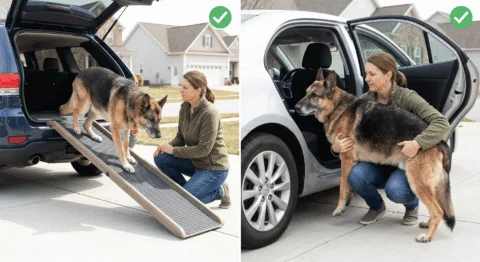
A ramp to the car or sofa removes the jarring impact of jumping down, which is a common cause of acute injury in dogs with already weak back ends.
Rear-Support Harness
Lets you assist your dog on stairs, on walks, and when standing without pulling on the neck. Essential for larger dogs and for assisted exercise.
Orthopedic Bed
Proper joint support during the 14-plus hours a day a senior dog spends resting reduces stiffness and makes rising easier, so he starts each exercise session in less pain.
Nutrition supports the whole effort too. A diet with adequate lean protein maintains muscle, while joint supplements such as omega-3 fatty acids can reduce the inflammation that drives the pain-inactivity cycle. Keeping your dog at a healthy weight is one of the most powerful things you can do, since every extra kilogram is extra load on already struggling joints.
Mistakes That Make Weakness Worse
Good intentions can backfire. These are the common errors that slow progress or cause harm.
Frequently Asked Questions
Yes, in many cases you can. Muscle responds to exercise at any age. Through consistent, gentle, targeted movement like sit-to-stand reps and controlled walking, senior dogs can maintain and often rebuild hind leg strength, provided the underlying cause of the weakness is understood and managed. The results are gradual and require patience, usually showing over three to six weeks. Dogs with progressive neurological conditions may not regain strength, but the right exercise can still slow decline and preserve quality of life.
Little and often is the guiding principle. Short sessions of 5 to 10 minutes, two or three times a day, work far better than one long session. Aim for the sit-to-stand reps twice daily and two or three short walks. Consistency across the week matters more than intensity on any single day. Muscle rebuilds through frequent low-stress repetition, not through occasional hard workouts, which only strain aging joints.
The sit-to-stand is the most valuable single exercise. It is the canine equivalent of a squat and directly targets the quads, hamstrings, and glutes that weaken first in senior dogs. Five slow controlled repetitions twice a day, encouraged with a treat, delivers real results. Hydrotherapy is the best zero-impact option if you have access to it, because water provides resistance without stressing painful joints. For most owners at home, the sit-to-stand plus short slow walks is the foundation.
The most common cause is age-related muscle loss, often accelerated by arthritis pain that makes the dog use the hind legs less. Other causes include intervertebral disc disease, hip dysplasia, and degenerative myelopathy, a progressive neurological condition. Because these require very different management, a vet examination is essential before starting any exercise program. Watch especially for dragging paws, knuckling over, or sudden collapse, which point to nerve involvement and need prompt veterinary attention.
Yes, short gentle walks are important and beneficial, once your vet has confirmed the cause. Complete rest actually worsens muscle wasting over time. Keep walks brief at 5 to 10 minutes, on flat even ground, using a rear-support harness so you can assist without pulling on the neck. Stop if your dog shows any increased discomfort. If the back legs are very weak or he tires quickly, reduce the duration and increase the frequency instead.
The Bottom Line
Weak hind legs are common in senior dogs, but they are not always a one-way street. Muscle responds to use at any age, and consistent gentle exercise can slow the decline and rebuild real strength.
Start with a vet visit to understand the cause. Then build a simple daily routine around the sit-to-stand, short slow walks, and gentle balance work. Support it with non-slip floors, a rear harness, good nutrition, and patience. Judge progress week by week, not day by day.
Most owners who commit to a few minutes twice a day see their dog moving more steadily and confidently within a month or two. That steadier turn, that easier rise from the floor, that willingness to walk a little further, those are the wins. Your dog gave you his best years. A few minutes a day helps you give some of that strength back. 🐾


One thought on “How to Strengthen a Senior Dog’s Hind Legs: 7 Vet-Backed Exercises”