
Senior Dog Hunched Back: 8 Causes and When to Worry
That hunched posture is not just old age. It is almost always your dog guarding something that hurts.
The encouraging part is that most causes are treatable, and many dogs are noticeably more comfortable within a few weeks. This guide covers all 8 causes, which ones are emergencies, and exactly what to do at home starting tonight.
Read This First
- Get a vet exam with X-rays, or an MRI, to find the exact cause
- Start vet-prescribed anti-inflammatory pain relief
- Add non-slip flooring and an orthopedic bed, the fastest home wins
- Raise the food and water bowls to stop the daily neck-down bend
- Begin short gentle daily exercise, never complete rest
- Add vet-approved omega-3 and joint supplements
- Consider hydrotherapy, laser therapy or acupuncture
- Recheck with your vet every 6 to 8 weeks
The 8 Causes of a Hunched Back in Senior Dogs
When a dog arches or rounds the back, the body is guarding a painful area. It is the same instinct that makes you curl forward when your own back goes.
Eight conditions account for almost all cases in older dogs. They look identical from across the room, which is exactly why the diagnosis matters so much: the right treatment for one can be the wrong treatment for another.
1. Spondylosis (bone spurs)
Small bony growths form along the vertebrae as the spine ages, the body’s attempt to stabilise joints that have loosened. Most dogs feel nothing. When the spurs press on nerves, the hunching starts. Very common in seniors.
2. Slipped disc (IVDD)
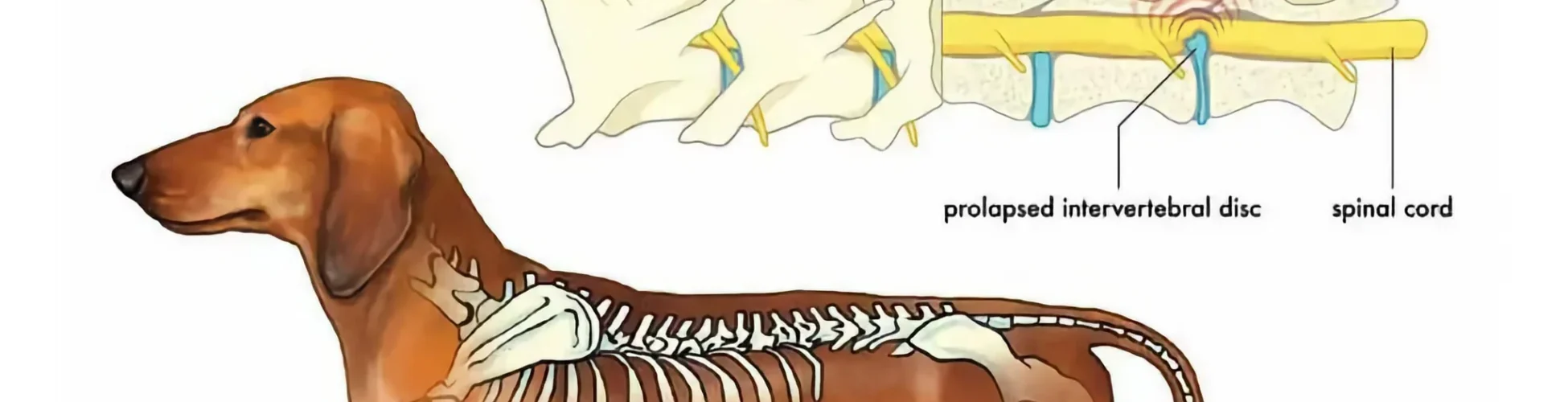
A disc bulges and presses on the spinal cord, causing sharp pain. The dog hunches to stop the painful segment moving at all. Can appear suddenly and is the one cause where the wrong exercise does real damage.
3. Spinal arthritis
Inflammation in the small joints between the vertebrae produces deep, aching stiffness. Dogs arch to avoid extending joints that hurt. Responds well to anti-inflammatory medication and gentle movement.
4. Paraspinal muscle loss
The muscles running alongside the spine waste with age and inactivity. Without that support the spine curves under its own weight. Develops slowly over months and is the cause that responds best to exercise.
5. Abdominal or organ pain
Pancreatitis, kidney trouble and other abdominal problems cause hunching as a protective reflex for a tender belly. Usually comes with vomiting, appetite loss, or a belly that feels tight to the touch.
6. Spinal canal narrowing
The canal housing the spinal cord narrows and compresses it, a condition called stenosis. Brings progressive weakness and a shuffling walk alongside the hunch. More common in larger breeds.
7. Disc or vertebral infection
Discospondylitis is a bacterial or fungal infection of a disc and the bone around it. Less common but important, because it causes severe back pain with fever and lethargy, and it needs antibiotics rather than anti-inflammatories.
8. Spinal tumours
Growths in or around the spinal cord cause progressive pain and weakness that keeps worsening despite treatment. Uncommon, but it is the reason a hunch that does not respond to standard care always deserves further imaging.
Why Is My Dog’s Spine Showing?
Many owners notice this before they notice the hunch itself. The bones along the back become visible, and suddenly the dog looks older than they did a few months ago.
A visible spine in a senior dog usually points to one of two things, and often both at once.
Muscle loss along the spine, the most common reason
Dogs lose muscle mass as they age, a process called sarcopenia. The paraspinal muscles running either side of the spine are often among the first to shrink, and when they do, the bony points of the vertebrae they used to cover become visible and easy to feel.
This is especially common in dogs who have become less active because of pain, and it turns into a cycle: pain reduces movement, less movement wastes muscle, lost muscle removes spinal support, and less support means more pain. Breaking that cycle with gentle targeted exercise is one of the most useful things you can do.
Weight loss from an underlying condition
If the spine became visible quickly rather than gradually, weight loss is more likely the cause than muscle wasting alone. Sudden weight loss in a senior dog warrants a vet visit and blood work, because kidney disease, dental pain and several other conditions all produce it.
Either way, the visible spine and the hunched posture usually appear together, because the same weakened muscles that reveal the bones also fail to hold the spine straight. Rebuilding them helps both problems at once, and the exercises further down target exactly those muscles.
Signs the Spinal Pain Is Getting Worse
The hunch itself is obvious. These secondary signs tell you how far things have progressed and how urgently to act.
What Your Vet Will Check
Treatment for a slipped disc looks nothing like treatment for spondylosis. This is the step that decides whether everything after it works.
Step 1: physical and neurological exam
Your vet presses along the spine to locate painful segments, tests reflexes and nerve responses in each leg, and watches your dog walk and turn. This alone separates a nerve problem from a bone and joint problem.
Step 2: X-rays of the spine
Shows bone spurs, narrowed disc spaces and overall alignment. Usually the first imaging done because it is quick, low stress, and answers a lot of questions immediately.
Step 3: MRI, if needed
X-rays cannot show soft tissue. An MRI reveals bulging discs, spinal cord compression and nerve damage. Reserved for more serious cases or when surgery is being considered.
Step 4: blood work
Rules out the causes that have nothing to do with the spine, including pancreatitis, kidney disease and infection. Particularly important when the hunching came on suddenly.
Treatment Options, From Gentle to Advanced
Most dogs never need surgery. The right combination of medication, movement and home care gets the majority of senior dogs comfortable again.
Anti-inflammatory pain medication
Almost always the first step. Veterinary NSAIDs reduce the swelling pressing on irritated nerves, and most dogs feel noticeably better within two to three days of starting them. Never substitute human painkillers, which are toxic to dogs.
First-lineWorks in 48 to 72 hoursCanine physiotherapy
A trained therapist rebuilds the muscles that support the spine. Stronger paraspinal muscles mean less load on the damaged vertebrae, which is the closest thing to treating the root problem rather than masking it.
Results in 4 to 6 weeksHydrotherapy
Your dog walks or swims in warm water, which supports body weight while still providing resistance. This builds spine-supporting muscle with almost no load on painful joints, and it is widely considered the single most effective non-surgical option.
Excellent resultsZero impactCold laser therapy
A low-level laser is passed along the spine to reduce deep tissue inflammation and stimulate repair. Non-invasive, painless and well tolerated by nervous older dogs who find hands-on therapy stressful.
Usually 6 to 10 sessionsVeterinary acupuncture
Fine needles placed near the spine activate the body’s own pain-relief pathways. Often used for chronic bone spur pain where medication alone is not enough. Many dogs relax completely during the session.
Builds over sessionsSurgery, for severe cases only
Needed when a disc is compressing the spinal cord and causing weakness or paralysis. This is time-sensitive: the best outcomes come from surgery performed within 24 to 48 hours of a sudden onset, which is why sudden cases should never wait.
Very effective when indicatedSupplements That Support the Spine
These support everything else you are doing. They do not replace medication or physiotherapy, and the evidence behind them varies considerably from one to the next.
| Supplement | What it does | Worth knowing |
|---|---|---|
| Omega-3 (fish oil) | Reduces inflammation around irritated nerves and joints | The strongest evidence of any joint supplement. Use marine-sourced EPA and DHA, not flaxseed |
| Glucosamine & chondroitin | Supports cartilage in the small spinal joints | The most widely used option. Takes 6 to 8 weeks to reach full effect |
| MSM | Anti-inflammatory support for spinal tissue | Usually sold combined with glucosamine rather than alone |
| Turmeric / curcumin | Helps with chronic inflammatory joint pain | Use a pet formulation. Raw powder is absorbed very poorly |
| Adequate lean protein | Slows the muscle loss that removes spinal support | Not a supplement, but many senior foods underestimate protein needs |
Home Changes That Help Right Away
You can start helping your dog tonight, without a prescription and without waiting for an appointment.
None of these treat the underlying cause. What they do is remove the dozens of small painful stresses your dog’s spine absorbs every day: the slipping, the jarring, the bending, the jumping down. For a dog already in pain, taking those away often produces a visible change within a week.
The Four Things That Make the Biggest Difference
Out of that checklist, these four do the most work. We have ordered them by impact rather than by price, and the one we would buy first happens to be the cheapest.
Non-slip flooring
A dog who slips braces and tenses, and that guarding is exactly what pulls a sore back tighter. Costs the least, takes an afternoon, and it is the one change that alters how your dog moves the same day.
See our 5 picks →An orthopedic bed
Your dog spends more of the day lying down than doing anything else. On a thin bed the spine and hips press into the floor for all of it, which is why stiffness is always worst first thing in the morning.
See the bed →A padded no-pull harness
A collar loads the neck and transmits every pull straight down the spine. A padded harness spreads that across the chest instead, and gives you somewhere safe to steady your dog from.
See the harness →A gate on the stairs
Stairs are the single highest-risk movement in the house for a dog with spinal pain. One awkward landing can turn a manageable problem into a surgical one, and a gate removes the risk entirely.
See the gate →Elder Pet Health earns from qualifying purchases. This costs you nothing extra, and it never changes what we recommend or the order we recommend it in.
4 Gentle Exercises You Can Do at Home
Short daily movement beats occasional long walks, and it beats rest by a wide margin.
The goal is to slowly rebuild the paraspinal muscles that hold the spine straight. Start gentler than you think you need to, and stop at any sign of pain. If your vet has diagnosed an active disc problem, check with them before beginning any of this.
Short flat walks, 5 to 10 minutes
Two or three times a day on level, even ground. No hills, no stairs, no rushing. The routine matters far more than the distance, and a slow pace forces proper weight-bearing rather than a hurried shuffle.
DailySit-to-stand repetitions
Ask your dog to sit, then stand, then sit again, five slow repetitions. This directly targets the hip and lower back muscles that hold the spine stable. Lure the movement with a treat rather than pushing your dog into position.
5 reps, twice dailyParaspinal massage
Run your fingertips slowly down both sides of the spine, beside the vertebrae rather than on them. This loosens the tight guarding muscles and improves blood flow to the area. Most dogs settle into it immediately.
5 minutes dailyWarm compress before movement
Lay a warm damp towel across the lower back for five minutes before any exercise. Heat relaxes tight muscles and makes the first few steps noticeably easier, which matters most on cold mornings.
Before every sessionWhat the Evidence Actually Shows
A fair summary of where the veterinary consensus sits, including where it is less certain than product marketing suggests.
Veterinary rehabilitation specialists consistently report that structured hydrotherapy reduces pain scores and improves mobility in dogs with degenerative spinal conditions. Water supports body weight while providing resistance, which is why it works for dogs too sore to exercise normally on land.
Of all the joint supplements sold for dogs, marine-sourced omega-3 has the strongest supporting evidence for reducing inflammation, and is often recommended as a first-line nutritional support alongside medication. The evidence for glucosamine and chondroitin is genuinely more mixed, which is worth knowing before you spend on them.
Clinical veterinary sources note that most dogs with spondylosis live long, comfortable lives with conservative management. The condition cannot be reversed, but it is not a countdown either, and many affected dogs never show pain at all.
Weight management and environmental modification are treated as first-line interventions for mild to moderate joint disease, before escalating medication. Non-slip flooring, supportive bedding and keeping your dog lean are not soft alternatives to real treatment. They are part of the standard clinical approach.
Frequently Asked Questions
The most common cause in older dogs is spondylosis, bony growths that press on spinal nerves. Spinal arthritis, a slipped disc, paraspinal muscle loss and abdominal pain can all produce the same posture. Your dog is arching to reduce movement in a painful area, the same instinct you have when your own back hurts. A vet exam with X-rays confirms which cause you are dealing with, and that matters because the treatments differ significantly.
Partly, and alongside veterinary care rather than instead of it. Orthopedic bedding, non-slip flooring, raised bowls, warmth, gentle massage and short walks all provide real relief from the first day. But the underlying cause needs identifying first, because the gentle exercise that helps an arthritic spine can worsen an active disc problem that needs rest. See a vet, get the diagnosis, then apply everything in this guide.
Spondylosis is essentially spine aging. As the spine wears, small bony spurs grow along the vertebrae as the body tries to stabilise joints that have loosened. Most dogs with spondylosis feel nothing at all. The hunching, stiffness and reluctance to move appear only when those spurs press on nearby nerves. It is not curable, but it is very manageable, and most affected dogs live comfortably for years.
Pain medication usually shows a visible difference within 48 to 72 hours. Physiotherapy and hydrotherapy build up over four to six weeks. Supplements take six to eight weeks to reach full effect. Home changes like non-slip flooring often work the same day. Expect good days and bad days, particularly in cold or damp weather, and judge progress week to week rather than day to day.
Yes, short gentle walks matter. Complete rest actually worsens the muscle wasting that removes spinal support in the first place. Keep walks to five or ten minutes on flat, even ground, using a rear-support harness rather than a collar. Stop if your dog shows increased discomfort. If the back legs are weakening too, shorten the walks further and increase the frequency instead.
A suddenly visible spine usually means one of two things. If it appeared over weeks, weight loss from an underlying condition such as kidney disease or dental pain is the likelier explanation, and that needs a vet visit with blood work. If it developed gradually over months, it is more likely muscle loss along the spine, which is common in less active senior dogs and can be improved with targeted exercise and adequate protein. A visible spine alongside a hunch points to the paraspinal muscles weakening, so rebuilding them helps both at once.
An arched back combined with a tucked or lowered tail is a strong indicator of pain, most often spinal or abdominal. The tucked tail is body language for discomfort, and paired with the arch it usually means your dog is actively guarding something. If this came on suddenly, or the belly also feels tight or looks swollen, treat it as urgent and see a vet the same day. If it developed gradually, book an exam soon to establish whether the cause is spinal, arthritic or abdominal.
A back that curves upward into a rounded shape while standing is the classic protective posture dogs adopt to immobilise a painful spine. In older dogs the usual causes are spondylosis, spinal arthritis and intervertebral disc disease. The curve is your dog holding the painful vertebrae still. This is treatable in most cases once you know which condition is responsible, so a vet exam with imaging is the sensible first step.
It always deserves attention, but it is not always an emergency. A mild hunch developing gradually from spondylosis or muscle loss is manageable, and many dogs live comfortably for years with the right care. However, a hunch that appears suddenly, comes with an inability to walk, a hard or swollen belly, or loss of bladder or bowel control is a genuine emergency needing same-day care. The posture alone never tells you the cause, which is why the vet visit is the part you should not skip.
The Bottom Line
A hunched back is your senior dog telling you something hurts. It is not simply old age, and it is not something you have to watch helplessly.
Start with a vet visit and get a clear diagnosis, because that single piece of information shapes everything else. Then combine the right medication with home changes, gentle daily movement and vet-approved supplements.
Most senior dogs with spinal problems go on to have months, and often years, of genuine comfort. The home changes cost little and work fast. The rest is patience and consistency. 🐾


[…] Vet urgency: Within the week. Not an emergency but needs diagnosis and management plan. 🧠 Related on Elder Pet Health Senior Dog Hunched Back: When Behavior Changes Signal a Spinal Pr… 2 Highly […]
[…] 🦴 Related Guide on Elder Pet Health Senior Dog Hunched Back: Causes, Treatment & Home Care … […]
[…] 💡 Ask specifically about a rehabilitation referral. A certified canine rehabilitation therapist (CCRP) builds a program matched to your dog’s exact diagnosis, body condition and home setup. Their results consistently beat generic advice, including the advice on this page. 🦴 Related Guide on Elder Pet HealthSenior Dog Hunched Back: 8 Causes and When to Worry → […]