
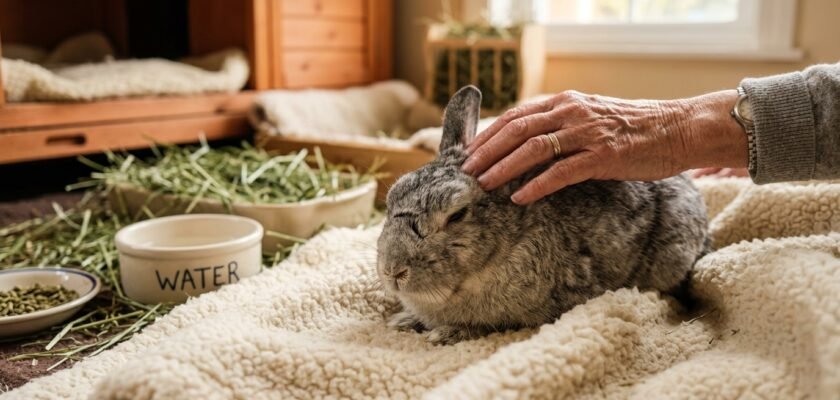
Quick Answer: Why Is My Senior Rabbit Not Eating?
When a senior rabbit stops eating, the most likely cause is GI stasis (gastrointestinal hypomotility), a medical emergency where the digestive tract slows down or halts completely. In older bunnies, stasis is rarely an isolated issue. It is almost always triggered by underlying pain from dental disease (molar spurs), arthritis, dehydration, or severe stress.
Unlike dogs or cats, rabbits cannot safely fast. If your older rabbit has eaten nothing for 8 to 12 hours or has stopped producing droppings, call a rabbit-savvy vet the same day. Without immediate veterinary intervention, gut slowdown can lead to fatal fatty liver failure within 24 to 48 hours.
Key Takeaways for Senior Pet Parents
- A skipped meal is a medical emergency: Rabbits require continuous dietary fiber. Fasting causes gut shutdown and fatal hepatic lipidosis in as little as 24 to 48 hours.
- Droppings provide the earliest warning: Smaller, drier, or fewer droppings usually appear 12 to 24 hours before total appetite loss.
- Search for the underlying cause: In senior rabbits, dental spurs, spinal arthritis, and kidney disease are the most common triggers.
- Know stasis vs bloat: A hard, drum-like belly with sudden collapse indicates acute bloat or blockage, requiring emergency veterinary care within 1 to 2 hours.
- Never give gut motility medicine at home: Administering gut stimulants to a rabbit with a physical obstruction can rupture the stomach. Always consult a vet first.
Table of Contents
- 1. Why a Rabbit Not Eating Is Always Serious
- 2. What Is GI Stasis in Rabbits?
- 3. Why Senior Rabbits Are at Greater Risk
- 4. Early Warning Signs of GI Stasis
- 5. GI Stasis vs Bloat (GI Obstruction): Critical Differences
- 6. Triage Guide: How Long Can a Rabbit Go Without Eating?
- 7. What Causes a Senior Rabbit to Stop Eating?
- 8. How to Tell If Your Bunny Is Sick (Beyond Not Eating)
- 9. What to Do Right Now (and What NOT to Do)
- 10. How Vets Treat GI Stasis and Home Recovery
- 11. How to Prevent GI Stasis in Older Rabbits
- 12. When Is It More Than Stasis? End-of-Life Warning Signs
- 13. Frequently Asked Questions
- 14. The Bottom Line and Clinical Disclaimer
1. Why a Rabbit Not Eating Is Always Serious
If your dog skips breakfast, you would probably keep an eye on him and not worry too much. With a rabbit, that same skipped meal means something very different.
A rabbit digestive system is built to run all the time. They eat small amounts of fibrous food almost around the clock. That constant flow of coarse fiber keeps the gut moving. When food stops going in, the gut starts slowing down. As it slows, gas builds up, and the gas makes the rabbit feel worse. A rabbit that feels worse eats less. It is a downward spiral, and it moves fast.
There is also a second critical danger. When a rabbit stops eating, the body breaks down stored fat for energy. Rabbits cannot handle this metabolic shift well. It quickly leads to hepatic lipidosis (fatty liver disease) in just a few days. Overweight senior rabbits are especially at risk. That is why veterinarians who treat rabbits emphasize that a rabbit not eating needs same-day medical attention.
2. What Is GI Stasis in Rabbits?
GI stasis (short for gastrointestinal stasis, sometimes called ileus or gut slowdown) happens when the normal muscular movement of the gut slows right down or stops. Food and fur sit in the stomach and intestines rather than passing through. The longer it sits, the more dehydrated and compacted it becomes.
Essential Medical Insight: GI stasis is rarely the root problem. It is what happens because something else made your rabbit uncomfortable enough to stop eating.
Treating stasis properly requires two goals. First, get the digestive tract rehydrated and moving again. Second, identify and resolve the underlying cause so the episode does not immediately recur.
3. Why Senior Rabbits Are at Greater Risk
Rabbits are generally considered senior from about 6 years of age (slightly earlier for giant breeds, and later for small dwarf breeds). As bunnies grow older, several biological vulnerabilities increase their risk of gut stasis:
Dental Wear and Molar Spurs
Rabbit teeth grow continuously throughout life. With age, the molars wear down unevenly, forming sharp points (spurs) that cut into the tongue and cheeks. Chewing fibrous hay becomes painful.
Arthritis and Reduced Mobility
Rabbits with sore hips or stiff spines move around less. Physical activity helps keep the gut active. When joint pain slows a rabbit down, their digestive tract often slows down too.
Muscle Loss and Lower Reserves
Older rabbits often lose muscle condition. This leaves them with fewer physical reserves when they fall ill. A senior rabbit declines faster from a period of not eating than a younger adult.
Chronic Underlying Illnesses
Kidney disease, liver issues, and Encephalitozoon cuniculi infections are more common in older rabbits. Any chronic disease lowers their resilience and triggers digestive pauses.
Emotional Grief and Stress
Losing a bonded companion is a major emotional trigger in older rabbits. A rabbit who has lived alongside a partner for years can sink into deep depression and refuse food completely.
Slower Convalescent Recovery
A young rabbit may bounce back from mild stasis within 24 hours of hydration and pain relief. A senior rabbit often needs several days of dedicated nursing and syringe feeding.
4. Early Warning Signs of GI Stasis
The earlier you catch digestive slowdown, the easier it is to treat successfully. Watch for these 9 warning signs, roughly in the order they tend to appear:
1. Changes in Fecal Droppings (The First Clue)
This is often the very first signal. Healthy droppings are round, plump, and uniform. As the gut slows, droppings become smaller, harder, drier, or strung together with hair like a necklace. An empty litter box is an immediate clinical emergency.
2. Eating Less or Getting Selective
Your bunny might still nibble a favorite leafy herb or treat but ignore their hay and pellets. Alternatively, they might run toward the food bowl with excitement, take one bite, and back away in discomfort.
3. Less Interest in Hay
In senior rabbits especially, a sudden drop in hay consumption points directly to mouth pain. Hay requires vigorous side-to-side chewing from the molars. They may still manage soft leafy greens while completely rejecting dry grass.
4. Lethargy and Withdrawing into Corners
A rabbit who sits in a quiet corner, avoids greeting you, or ignores toys they usually love is communicating illness. Prey animals isolate themselves when feeling vulnerable.
5. Hunched Sitting Posture and Belly Pressing
A rabbit experiencing gut cramping often sits tightly hunched up with paws tucked beneath their chest. They may also stretch out flat, pressing their belly against a cool floor to ease gas pressure.
6. Loud, Painful Tooth Grinding (Bruxism)
Soft tooth clicking while being petted is a sign of contentment (tooth purring). In contrast, loud, harsh, audible grinding while hunched over signals sharp abdominal pain.
7. A Tight or Swollen Belly
Gently feel your rabbit belly. Normally it feels soft and doughy. In stasis, the stomach feels noticeably firm, bloated, or taut from trapped gas.
8. Eerie Silence or Very Loud Gut Sounds
A healthy rabbit stomach makes soft, occasional bubbling sounds if you rest your ear against it. Complete silence means peristalsis has stopped. Very loud, sloshing gurgles can indicate painful gas buildup.
9. Cold Ears or Low Body Temperature
A rabbit normal body temperature is 101 to 103 degrees Fahrenheit (38.3 to 39.4 degrees Celsius). If their ears feel icy cold, circulation is slowing and the bunny may be going into shock.
5. GI Stasis vs Bloat (GI Obstruction): Critical Differences
These two conditions are frequently confused, and the difference is critical because the medical treatment is completely distinct. True bloat (acute gastric dilation) is caused by a physical blockage and requires emergency surgery or decompression within 1 to 2 hours.
| Clinical Feature | GI Stasis (Gut Slowdown) | Acute Bloat (GI Obstruction) |
|---|---|---|
| How It Starts | Gradually, developing over 12 to 48 hours | Suddenly, often within 2 to 6 hours |
| Appetite | Slowly drops off; may still eat favored greens | Stops completely and abruptly |
| Belly Feel | May feel doughy, firm, or mildly gassy | Very swollen, tight, hard like a drum |
| Behavior | Quiet, hunched, less active, withdrawn | Severe agony, restlessness, shock, collapse |
| Primary Cause | Intestinal contractions have slowed down | A physical object blocks the digestive tract |
| Urgency Level | See a rabbit-savvy vet the same day | Emergency: See a vet immediately |
Why This Difference Matters
Some owners attempt home belly massages or administer gut motility drugs to get things moving. If your rabbit has an acute obstruction rather than ordinary stasis, massaging a swollen stomach or giving motility stimulants can rupture the gut wall, which is fatal. Never give gut stimulants without veterinary guidance.
6. Triage Guide: How Long Can a Rabbit Go Without Eating?
This is one of the most common questions from concerned owners, and the honest clinical answer is: not long at all. Follow this hour-by-hour triage protocol:
| Time Without Eating or Pooping | What It Means | What to Do |
|---|---|---|
| Eating less, fewer droppings | Early Warning | Monitor closely. Offer fresh grass hay, wet leafy greens, clean water, and call your vet. |
| About 12 hours with no food | Urgent | Call your vet and arrange to be seen that day. Do not wait overnight. |
| 12 hours with no droppings | Urgent | Same day vet visit. Gut motility has ground to a halt. |
| 24 hours with no food or droppings | Emergency | Go to a vet clinic right now, including an emergency clinic if after hours. |
| Swollen belly, collapse, cold ears | Critical | Proceed to the nearest emergency hospital immediately. |
For a senior rabbit, rabbit-savvy veterinarians would always rather you call sooner than later. Older rabbits have fewer reserves, and waiting can narrow the window for recovery.
7. What Causes a Senior Rabbit to Stop Eating?
When a rabbit develops GI stasis, the veterinarian job is to treat the stasis and identify the trigger. The most common triggers in older bunnies include:
- Dental Problems: Molar spurs, overgrown incisors, and tooth root abscesses. Sharp points on the back molars are the single most frequent cause of appetite loss.
- Pain from Arthritis or Spinal Problems: Sore joints reduce physical movement, which directly slows the gut. In our detailed guide on preventing sore hocks in aging bunnies, we explain how decreased mobility causes pressure sores and pain cycles that suppress appetite.
- Low-Fiber Diet: Feeding too many commercial pellets or sugary treats and not enough coarse grass hay. Refer to our senior rabbit diet guide for safe vegetables and daily portion sizes for older bunnies.
- Dehydration: Not drinking enough clean water, which dries out gut contents and turns digested food into a hard mass.
- Stress and Bereavement: Loss of a bonded companion, moving to a new home, loud noise, or a new household pet. Emotional stress shuts down digestion rapidly in older rabbits.
- Ingested Fur: Heavy shedding cycles, especially in rabbits with arthritis who cannot groom cleanly.
- Urinary Tract Problems: Bladder sludge or stones, which are very painful. Providing accessible low-entry litter boxes for senior rabbits helps arthritic rabbits urinate comfortably without holding their bladder.
- Slipping Floor Anxiety: Fear of slippery hardwood or tile flooring. Adding supportive non-slip rugs for older pets provides confident footing and encourages active hopping.
- Kidney or Liver Disease: Organ dysfunction that lowers appetite and impairs metabolic waste elimination.
- E. cuniculi Infection: A microsporidian parasite that can cause head tilt, renal damage, and loss of balance.
- Uterine Tumors: Uterine cancer in unspayed female rabbits over 4 years of age.
- Recent Surgery or Sudden Diet Changes: Ingesting new foods introduced too quickly without a transition period.
8. How to Tell If Your Bunny Is Sick (Beyond Not Eating)
Learning how to tell if my bunny is sick requires attentive observation. Because rabbits are prey species, they mask physical vulnerability instinctively. If you are wondering how to know if your rabbit is sick, check for these warning signals:
Not eating or drinking as usual: Leaving untouched pellets or drinking substantially less water.
Changes in droppings or urine: Small dry droppings, or very thick chalky white or red-tinged urine.
Sitting hunched or refusing to move: Staying curled up tightly and failing to come out for daily routines.
Head tilt or loss of balance: Tilting head, circling continuously, or falling over on one side.
Fast breathing while lying down: Rabbits breathe exclusively through their nose. Breathing hard while lying flat indicates severe pain or shock.
Wet chin or drooling (slobbers): Saliva soaking the chin fur signals overgrown back teeth cutting the tongue.
Weight loss or prominent spine: A spine and hip bones that feel noticeably sharper during gentle petting.
Dirty rear end: Cecotropes stuck around the tail indicating arthritis prevents reaching down to groom.
Sore hocks on rear paws: Red, hairless, or ulcerated calluses on the underside of the hind feet.
Shaking while lying flat: Full body trembling paired with listlessness points to intense gut pain or hypothermia.
9. What to Do Right Now (and What NOT to Do)
While arranging an urgent veterinary visit, follow these immediate safe steps and avoid common dangerous mistakes:
| What to Do Right Now (Safe Steps) | What NOT to Do at Home (Dangerous) |
|---|---|
| Call a rabbit-savvy vet: Locate an exotic animal specialist experienced with rabbit gut dynamics. | Never give gut stimulants: Giving motility drugs before an obstruction is ruled out can burst the stomach. |
| Record exact symptoms: Note when food was last eaten, when droppings stopped, and abdominal firmness. | Never aggressively massage: Firm pressure on a distended, painful abdomen risks internal organ damage. |
| Offer wet leafy greens: Spritz cilantro or parsley with fresh water for voluntary hydration (do not force feed). | Never give human painkillers: Medications like ibuprofen, acetaminophen, or aspirin are lethal to rabbits. |
| Keep warm and quiet: Provide a warm towel or soft blanket in a calm, peaceful, low-stress room. | Never feed bread or sugary treats: Simple carbohydrates promote dangerous bacterial blooms in a stalled cecum. |
| Bring droppings & bonded mate: Transporting their companion along significantly reduces clinical handling stress. | Never wait overnight to see: In older rabbits, acting a few hours earlier makes all the difference. |
10. How Vets Treat GI Stasis and Home Recovery
Veterinary treatment depends on the severity of the slowdown and its root cause. Your veterinarian will check your rabbit temperature, palpate the abdomen, examine the teeth with an otoscope, and may take X-rays. Clinical care centers around:
- Pain Relief: This is often the most critical component. A rabbit in pain will not eat, and a rabbit that does not eat cannot recover. Vets commonly prescribe meloxicam or stronger analgesics.
- Fluid Resuscitation: Fluids administered under the skin (subcutaneously) or via IV drip to rehydrate the rabbit and soften the dried gut contents.
- Gut Motility Medication: Prokinetic drugs like metoclopramide or cisapride, but only after a physical blockage has been carefully ruled out.
- Assisted Syringe Feeding: Feeding a high-fiber recovery formula (like Critical Care) to keep nutrients flowing until the bunny eats voluntarily.
- Thermal Support: Gentle warming if the rabbit body temperature has dipped below normal.
- Addressing the Underlying Cause: Trimming sharp molar points, treating arthritis pain, or initiating antibiotic therapy if an infection is present.
Recovery and Home Care for Senior Rabbits
Once your veterinarian has stabilized your companion, home nursing usually involves:
- Syringe feeding as directed: Feed slowly from the corner of the mouth until your rabbit resumes eating adequate hay on their own.
- Monitoring daily droppings: Regular, full-sized droppings are the clearest indicator that the gut is moving again.
- Administering all prescribed medications: Continue pain relievers for the complete duration recommended by your vet.
- Offering unlimited fresh hay: Keep fragrant timothy or orchard hay within easy reach of resting spots.
- Weighing on a kitchen scale every few days: Tracking weight helps catch subtle muscle and weight drops early.
11. How to Prevent GI Stasis in Older Rabbits
You cannot prevent every episode, but practical preventative care dramatically reduces risk. Do rabbits need hay? The clinical answer is an absolute yes. Unlimited grass hay provides the coarse indigestible fiber that drives muscular gut contractions and grinds down continuously growing teeth.
Unlimited Grass Hay, Always
Timothy, orchard, or meadow hay should make up at least 80% to 85% of your senior rabbit daily diet to keep peristalsis running.
Modest Pellets and Zero Sugary Treats
Less active senior bunnies need fewer pellet calories. Eliminate sugary commercial snacks and keep fruit treats to a single tiny bite.
Fresh Water in Accessible Bowls
Rabbits drink significantly more from wide ceramic bowls than sipper bottles. Easy water access prevents dehydration and gut impaction.
Regular Geriatric Dental Exams
Have your vet examine your senior rabbit molars every 6 months. Catching spurs early prevents painful tongue lacerations.
Manage Arthritis and Living Space
Use low-lip litter pans, supportive floor mats, and vet-approved pain management so your bunny can move comfortably.
Daily Brushing During Shedding
Senior rabbits cannot groom as efficiently. Daily brushing removes loose fur before it can be swallowed and formed into gut plugs.
12. When Is It More Than Stasis? End-of-Life Warning Signs
Caring for a geriatric companion often raises difficult questions, including how to tell if a rabbit is dying. While gut stasis is treatable when caught early, severe clinical decompensation requires immediate emergency care.
Signs that a rabbit is critically ill include lying flat on their side and being unable to rise, very cold ears and feet, very slow or labored breathing, and failing to respond to your voice or touch. If you are wondering why is my rabbit not moving but still breathing, your pet may have entered severe circulatory shock, extreme hypoglycemia, or terminal organ failure.
These signs do not always mean a rabbit cannot be saved. Animals in shock sometimes recover with prompt IV fluid therapy, warming incubators, and emergency veterinary medication. If you observe these symptoms, proceed to an emergency hospital right away. If your senior rabbit has a known terminal illness, discuss comfort care and quality of life with your veterinarian beforehand so you can make compassionate choices without panic.
13. Frequently Asked Questions
Click below to expand veterinary answers to the most common questions about senior rabbit appetite loss:
Why is my rabbit not eating but still pooping?+
Why isn’t my bunny eating hay but still eating treats?+
How long can a rabbit go without eating before it’s dangerous?+
Can GI stasis in rabbits fix itself?+
What does GI stasis poop look like?+
Is my rabbit grinding its teeth because of pain?+
Why is my rabbit breathing fast while lying down?+
Why is my rabbit shaking and lying down?+
Can I give my rabbit simethicone for gas?+
Does GI stasis come back?+
Are senior rabbits more likely to get GI stasis?+
14. The Bottom Line
A senior rabbit who stops eating is communicating an urgent plea for help. In most cases, that issue is gastrointestinal stasis triggered by dental pain, arthritis, dehydration, or stress. Rabbits cannot safely wait out a digestive slowdown.
Learn your rabbit normal habits. Check the litter box every day. If your senior rabbit stops eating or stops producing droppings, do not wait overnight to see if they improve. Call your rabbit-savvy veterinarian that day. With older rabbits, acting a few hours earlier can make all the difference.
Veterinary Medical Notice: This article provides general educational information for pet owners and is not a substitute for professional veterinary advice, diagnosis, or clinical care. If your rabbit has stopped eating, stopped producing droppings, or seems unwell, please contact a rabbit-savvy or exotic animal veterinarian as soon as possible.

