
Quick Answer: What Should a Senior Rabbit Eat?
A senior rabbit needs unlimited fresh grass hay every day, making up 80% to 85% of their total diet. Supplement the hay with 2 to 3 low-calcium leafy greens daily and a small, measured portion of plain timothy pellets (1 to 2 tablespoons depending on body weight).
Keep fruit treats to no more than one teaspoon once or twice a week. Older rabbits have slower metabolisms and spend more time resting, so excess carbohydrates and sugars readily cause digestive upset, soft cecotropes, or weight gain.
Key Takeaways: Senior Rabbit Diet Essentials
- Hay forms 80% to 85% of daily food: Unlimited grass hay (second-cut timothy, orchard grass, or meadow hay) maintains digestive motility and grinds down constantly growing teeth.
- Low-calcium daily greens: Feed safe greens such as romaine, green leaf lettuce, cilantro, and bok choy. Keep high-calcium greens like kale and spinach limited to prevent bladder sludge.
- Measured plain timothy pellets: Provide 1 to 2 tablespoons of plain green pellets daily. Avoid muesli-style seed and corn mixes that encourage selective eating.
- Strict fruit moderation: Limit fruit treats to a single teaspoon once or twice weekly to protect sensitive cecal bacteria.
- Watch hay eating closely: Any noticeable drop in hay intake is usually the first sign of back tooth spurs or digestive discomfort.
Table of Contents
- Why an Older Rabbit’s Diet Needs Attention
- Hay: The Foundation of the Diet
- Best Safe Vegetables and Herbs
- Vegetables to Feed in Small Amounts
- Fruits and Treats: Safe Portion Rules
- Foods That Must Never Be Fed
- Daily Feeding Portions by Bunny Weight
- Teeth Trouble, Water, and Warning Signs
- Frequently Asked Questions
- The Bottom Line on Senior Rabbit Diet
Why an Older Rabbit’s Diet Needs Attention
Most rabbits enter their senior years around six years old. Larger breeds age somewhat earlier, often by age four or five, while dwarf breeds can remain active adults until age seven or eight.
You do not need to overhaul your rabbit’s routine overnight. Aging brings three specific physical shifts that directly impact nutrition:
Reduced Activity
Older rabbits spend more hours napping and less time running or doing binkies. Because their daily calorie burn drops, sugary treats cause rapid weight gain and put extra strain on their joints.
Dental Wear and Spurs
Rabbit teeth grow continuously throughout life. With age, slight chewing misalignments can cause sharp spurs on the back molars that rub the cheeks and make coarse hay painful to grind.
Slower Digestive Motility
Gut motility naturally becomes more sensitive. Abrupt diet switches, starchy human foods, or gas-producing vegetables can slow down intestinal passage and lead to gut stasis.
Stiff hips or spine arthritis can also make getting into a tall litter box difficult. Setting up an accessible feeding area using low-entry litter boxes for senior rabbits ensures they can reach their hay piles comfortably without struggling over high plastic rims.
Hay: The Foundation of the Diet
Fresh grass hay remains the single most important component of any rabbit’s diet. For seniors, steady hay intake is essential. Keep a fresh pile available around the clock, roughly the size of the rabbit’s body.
The mechanical action of chewing long hay fibers wears down teeth evenly from front to back. Coarse fiber also drives normal gut contractions, moving swallowed fur and digested matter steadily through the tract.
Choosing the Right Hay for Your Senior Bunny
If your rabbit suddenly reduces how much hay they chew, schedule a veterinary oral exam. Hesitation around hay is rarely just pickiness; it is frequently the earliest visible indicator of dental spurs.
Best Safe Vegetables and Herbs
Vegetables that are safe for adult rabbits are generally fine for seniors as well. What changes is consistency. Aging digestive systems do best with a predictable, familiar menu rather than constant rotation.
Choose two or three dependable greens that your rabbit tolerates without soft cecotropes, and feed those consistently:
Daily Staple Greens
Low CalciumGentle on older kidneys and bladders. Suitable for everyday feeding:
- Romaine Lettuce: Crisp, hydrating, and low in calcium. (Avoid iceberg lettuce).
- Green Leaf Lettuce: Soft leaves that are easy for older teeth to chew.
- Bok Choy: Provides clean hydration and manageable fiber.
- Arugula: Peppery taste that helps entice rabbits with lighter appetites.
- Endive and Escarole: Crisp salad greens that provide steady roughage.
Safe Fresh Herbs
Flavor and ScentNaturally aromatic with minimal sugar. Great for encouraging appetite:
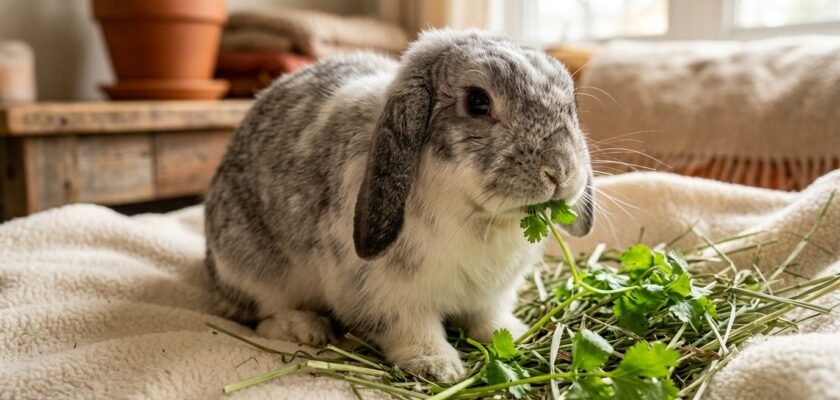
- Fresh Cilantro: Strong scent that stimulates feeding and adds moisture.
- Sweet Basil: Aromatic herb that helps tempt choosy older eaters.
- Fresh Dill: Tender sprigs that are gentle on digestive tracts.
- Mint: Refreshing and easy to chew for older mouths.
- Parsley: Nutritious in small sprigs, but feed in moderation due to moderate calcium content.
Scattering herbs across the living space encourages gentle activity. Placing traction rugs like non-slip rugs for aging pets across smooth floors keeps their back legs stable as they move around to forage.
Vegetables to Feed in Small Amounts
Some vegetables that are fine for younger bunnies need careful portioning in seniors. Certain vegetables produce gas during cecal fermentation or contain high levels of calcium or oxalates.
Rabbits cannot burp or vomit. When gas accumulates in a slower digestive tract, the resulting cramping can cause a rabbit to stop eating altogether. Use these serving guidelines:
| Vegetable | Why Be Careful | Safe Serving Rule |
|---|---|---|
| Cabbage (Green or Red) | Produces significant gas during cecal fermentation. | Give rarely in tiny shreds, or skip completely. |
| Kale | High calcium content can contribute to bladder sludge. | Limit to one small leaf once per week. |
| Broccoli and Cauliflower | Dense florets ferment quickly and cause belly bloating. | Feed only small leaf pieces; omit florets. |
| Brussels Sprouts | Sulfur compounds create intestinal gas pressure. | Half a small sprout occasionally at most. |
| Spinach and Swiss Chard | High in oxalates and calcium, putting extra burden on kidneys. | Feed only occasionally in small quantities. |
Fruits and Treats: Safe Portion Rules
Rabbits are naturally drawn to sweet foods, but their cecum is specialized for high-fiber, low-sugar digestion. Large amounts of simple sugars throw off normal bacterial balances.
While younger bunnies burn through energy quickly, senior rabbits rest for most of the day. Unused carbohydrates can cause gut bacterial shifts, resulting in loose stools, gas, and discomfort.
The Teaspoon Rule: 1 to 2 Times Per Week
Keep fruit portions to no more than one level teaspoon per four pounds of body weight. Offer this treat once or twice a week, not as a daily feeding item.
Safe Fruits in Modest Portions
- Raspberries and Blackberries: Lower in sugar than orchard fruits and high in dietary fiber.
- Papaya and Pineapple: Fresh pieces contain digestive enzymes. Avoid canned versions packed in sweet syrup.
- Blueberries: One or two fresh berries make a clean, manageable treat.
- Apple: A thin, paper-like slice with all seeds removed (apple seeds contain trace cyanide compounds).
- Banana: Give only a coin-thin slice occasionally. Bananas are very dense in fruit sugars and starch.
Excess weight also increases pressure on the hind feet. Overweight older rabbits rest heavily on their hocks, accelerating fur loss and contributing to sore hocks in aging bunnies. Keeping treats minimal protects both digestion and foot health.
Foods That Must Never Be Fed
Senior rabbits have little physiological reserve to cope with toxic compounds or severe gut irritation. Keep these items strictly out of reach:
Onions, Garlic, Leeks and Chives
Alliums contain organosulfur compounds that cause hemolytic anemia in rabbits by damaging red blood cells.
Avocado
Contains persin, a fungicidal toxin that can cause respiratory distress, fluid accumulation, and heart failure.
Chocolate and Caffeinated Items
Theobromine and caffeine are toxic methylxanthines that trigger severe arrhythmias, seizures, and fatal nervous system stress.
Bread, Crackers, Pasta and Cereals
Starchy carbohydrates feed gas-producing bacteria in the cecum, causing rapid dysbiosis and painful bloat.
Nuts, Seeds and Whole Corn
High fat levels strain the liver. Dried corn hulls cannot be digested and frequently create physical intestinal blockages.
Iceberg Lettuce
Offers almost no nutritional value and contains lactucarium, which can cause severe diarrhea in older rabbits.
Daily Feeding Portions by Bunny Weight
A senior rabbit’s daily portions should reflect their body weight and activity level:
| Rabbit Size | Timothy Hay | Fresh Greens | Timothy Pellets | Fruit Treats |
|---|---|---|---|---|
| Small / Dwarf (2 to 4 lbs) | Unlimited daily supply | 1 packed cup daily | 1 tablespoon | Half a teaspoon, 1 to 2 times a week |
| Medium Breed (5 to 7 lbs) | Unlimited daily supply | 1.5 to 2 packed cups | 2 tablespoons (1/8 cup) | 1 teaspoon, 1 to 2 times a week |
| Large / Giant (8+ lbs) | Unlimited daily supply | 2.5 to 3 packed cups | 1/4 cup maximum | 1 teaspoon, 1 to 2 times a week |
Teeth Trouble, Water, and Warning Signs
Rabbits are prey animals and instinctively mask pain and discomfort. Subtle behavioral changes at mealtime are often the only early signal that something is wrong.
Watch for these warning signs during daily feedings:
Signs of Tooth Pain in Older Rabbits
Warning Signs of GI Stasis
Contact a rabbit-experienced veterinarian promptly if your senior rabbit exhibits any of these symptoms:
- Refusing all hay, greens, or favorite treats for 8 to 12 hours.
- Absence of fecal droppings, or only passing very small, hard, irregularly shaped pellets.
- Sitting hunched in a corner, reluctant to move or adjust position.
- Loud, repetitive tooth grinding, which is a classic indicator of abdominal pain.
- A firm, distended abdomen that feels swollen or bloated.
Frequently Asked Questions
Tap any question to expandCan senior rabbits eat the same vegetables as younger rabbits?▾
Can rabbits eat arugula, basil, or cilantro?▾
Is cabbage safe for older rabbits?▾
Can older rabbits eat kale?▾
Can rabbits eat berries, pineapple, or banana?▾
Can rabbits eat onions, avocado, nuts, or seeds?▾
Why is my older rabbit eating less hay?▾
Do I need to change my senior rabbit’s diet just because of age?▾
The Bottom Line on Senior Rabbit Diet
Feeding an aging rabbit successfully relies on straightforward, steady habits: unlimited fresh grass hay, a handful of low-calcium greens, fresh water, and minimal sugary treats.
Pay close attention to daily eating and droppings. Keeping meals consistent and addressing subtle appetite drops right away is the most reliable way to keep your senior rabbit comfortable and healthy.
Veterinary Medical Notice: This article is for educational purposes only and is not a substitute for veterinary diagnosis or personalized treatment. If your rabbit stops eating, shows signs of abdominal pain, or stops passing droppings, contact a rabbit-experienced veterinarian promptly.

