
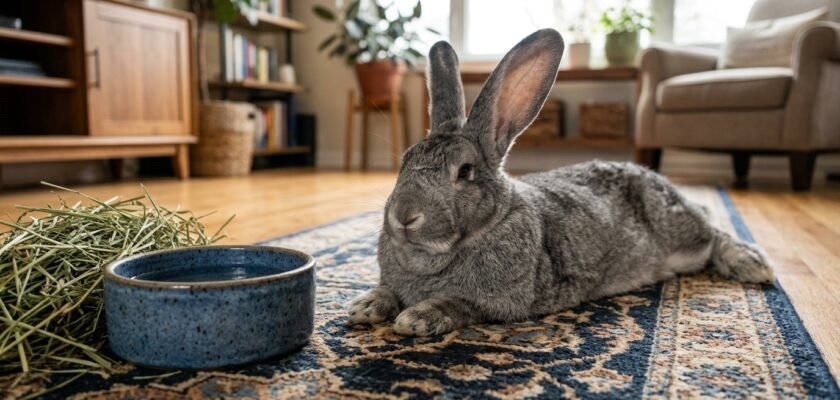
Quick Answer: How Long Do Pet Rabbits Live?
Domestic pet rabbits live an average of 8 to 12 years, with many small breeds reaching 12 to 15 years with good home care and regular vet visits. Wild rabbits rarely survive past 1 to 2 years because of predators, disease, and harsh winters.
Breed size is the main factor in lifespan. Dwarf and miniature rabbits regularly outlive giant breeds by several years. Spaying or neutering early (which prevents common reproductive cancers), feeding unlimited grass hay, keeping rabbits indoors, and booking regular checkups with a rabbit-savvy vet make the biggest difference to how long they live.
Key Takeaways: Rabbit Lifespan and Daily Care
- Average domestic lifespan: Well-cared-for house rabbits live 8 to 12 years, and the oldest documented rabbit lived to nearly 19.
- Size matters: Dwarf breeds average 10 to 12 or more years, medium breeds live 8 to 10 years, and giant breeds typically live 5 to 8 years.
- When they become seniors: Giant breeds count as seniors at 4 to 5 years, while dwarf rabbits become seniors at 7 to 8 years.
- Desexing saves lives: Spaying female rabbits prevents uterine cancer, which affects up to 60 to 80 percent of unspayed females over age 4.
- Hay is essential: Chewing long-stem fiber grinds down growing teeth naturally and keeps the gut moving, preventing painful dental spurs and life-threatening gut stasis.
Table of Contents
- 1. Average Rabbit Lifespan: Pet vs Wild Rabbits
- 2. Rabbit Lifespan by Breed (Complete Comparison Table)
- 3. When Is a Rabbit Considered Senior? Common Signs of Aging
- 4. 8 Main Factors That Determine How Long a Rabbit Lives
- 5. Common Health Problems in Aging Rabbits
- 6. How to Help Your Rabbit Live a Long, Healthy Life
- 7. Caring for a Senior Rabbit: Area-by-Area Guide
- 8. How to Tell How Old a Rabbit Is
- 9. Quality of Life in the Golden Years
- 10. Frequently Asked Questions
- 11. The Bottom Line and Veterinary Disclaimer
1. Average Rabbit Lifespan: Pet vs Wild Rabbits
Pet rabbits and wild rabbits have almost nothing in common when it comes to lifespan. Decades ago, rabbits were seen as short-lived starter pets, rarely making it past four or five years in outdoor hutches on muesli-based diets. Better exotic veterinary care, indoor housing, and high-fiber pellet-and-hay feeding have changed that considerably. Pet rabbits commonly reach 10 to 12 years now.
Wild rabbits (Oryctolagus cuniculus) face a very different reality. Predators, disease outbreaks like myxomatosis and Rabbit Hemorrhagic Disease (RHDV), and food shortages mean more than 80 percent of wild kits do not survive their first year. Adults that make it through average 1 to 2 years.
| Category | Typical Lifespan & Longevity Range |
|---|---|
| Wild Rabbit | 1 to 2 years (rarely 3 years due to heavy predation) |
| Average Domestic Pet Rabbit | 8 to 12 years (with indoor housing & hay-first diet) |
| Small & Dwarf Breeds | 10 to 14+ years |
| Medium Sized Breeds | 8 to 10 years |
| Giant Breeds | 5 to 8 years |
| Oldest Rabbit on Record | Nearly 19 years old (Flopsy, certified by Guinness World Records) |
2. Rabbit Lifespan by Breed (Complete Comparison Table)
As with dogs, larger rabbits generally have shorter lives. Giant breeds place more strain on their joints and cardiovascular systems, showing age-related decline earlier. Compact dwarf breeds, on the other hand, frequently live well past age 12.
The table below details typical life expectancies across 15 popular domestic breeds:
| Breed Name | Size Category | Typical Life Expectancy |
|---|---|---|
| Netherland Dwarf | Small / Dwarf (1.5 to 2.5 lbs) | 10 to 12+ years |
| Holland Lop | Small (3 to 4 lbs) | 7 to 12 years |
| Mini Lop | Small to Medium (5 to 6.5 lbs) | 7 to 10 years |
| Mini Rex | Small (3.5 to 4.5 lbs) | 7 to 10 years |
| Lionhead | Small (3 to 3.75 lbs) | 7 to 10 years |
| Dutch | Small to Medium (4 to 5.5 lbs) | 5 to 10 years |
| Polish | Small (2.5 to 3.5 lbs) | 5 to 10 years |
| Rex | Medium (7.5 to 10.5 lbs) | 5 to 8 years |
| English Angora | Medium (5 to 7.5 lbs) | 7 to 12 years |
| Californian | Medium to Large (8 to 11 lbs) | 5 to 10 years |
| New Zealand | Large (9 to 12 lbs) | 5 to 8 years |
| English Lop | Large (9 to 11 lbs) | 5 to 7 years |
| French Lop | Giant (10 to 14+ lbs) | 5 to 7 years |
| Flemish Giant | Giant (14 to 20+ lbs) | 5 to 8 years |
| Continental Giant | Giant (16 to 24+ lbs) | 4 to 7 years |
Mixed-breed rabbits (“mutt” bunnies adopted from shelters) frequently display hybrid vigor and live just as long as, or longer than, registered purebred rabbits.
3. When Is a Rabbit Considered Senior? Common Signs of Aging
Because body size affects how quickly rabbits age, senior care starts at different ages depending on the breed:
- Giant breeds (Flemish Giants, French Lops): Senior at 4 to 5 years of age.
- Medium and large breeds (Californians, New Zealands): Senior at 6 years of age.
- Small and dwarf breeds (Netherland Dwarfs, Holland Lops): Senior at 7 to 8 years of age.
Calendar age is only a general guideline. Watch for these physical and behavioral changes that show your rabbit is aging:
- Longer naps: Sleeping more during the day and showing less interest in running or binkies.
- Stiffness after resting: Hesitation or awkward, stiff hops when getting up from a long nap.
- Litter box accidents: Hesitating or refusing to jump over high litter box sides because of aching joints or spinal arthritis.
- Muscle loss: A bonier feel along the spine and hips as muscle over the back legs thins out.
- Unkempt fur or dirty hindquarters: Difficulty bending to clean themselves or eat cecotropes directly, leaving messy fur around the tail.
- Cloudy eyes: A bluish haze (nuclear sclerosis) or white cataracts developing in one or both eyes.
4. 8 Main Factors That Determine How Long a Rabbit Lives
Eight main factors influence whether a rabbit reaches double digits:
- Spaying and neutering: Up to 60 to 80 percent of unspayed female rabbits develop malignant uterine cancer by age 4 or 5. Spaying removes this risk completely. Neutering males prevents testicular cancer and cuts down on territorial fights and spraying.
- A hay-first diet: Grass hay needs to make up at least 80 to 85 percent of daily intake. Continuous chewing keeps the digestive tract moving and wears down growing teeth evenly, protecting against GI stasis.
- Regular dental checks: Rabbit teeth grow continuously, around 2 to 3 millimeters each week. Routine checks with an otoscope catch sharp spurs before they cut into the tongue or cheeks.
- Indoor housing: Indoor rabbits live significantly longer than outdoor hutch rabbits. They are shielded from predators, freezing winters, summer heatstroke, and flystrike.
- Daily exercise: Several hours of free hopping on grippy surfaces keeps bones strong, maintains muscle, and stimulates normal gut digestion.
- Companionship: Rabbits are deeply social. A bonded companion or daily hands-on companionship from owners reduces stress and prevents loneliness, as outlined in our guide on rabbit loneliness.
- A rabbit-savvy vet: Rabbits have unique digestive systems and sensitivities to certain antibiotics and anesthesia. Finding a veterinarian experienced with exotic companion mammals is essential.
- Temperature control: Senior rabbits struggle to regulate their body temperature. Keeping their environment stable and warm, as covered in our guide on safe temperatures for senior rabbits, protects them from hypothermia.
5. Common Health Problems in Aging Rabbits
Catching warning signs early allows simple adjustments before chronic conditions become serious emergencies:
- Dental spurs: Sharp points on the back teeth that cut into the cheeks and make chewing painful.
- Arthritis and spinal stiffness: Joint wear in the hips and spine that makes hopping, jumping, and personal grooming painful.
- Kidney disease: Gradual decline in kidney function marked by drinking more water, peeing more frequently, and losing weight.
- Head tilt and balance loss: Often triggered by inner ear infections or E. cuniculi, as explained in our guide on head tilt in older rabbits.
- Sore hocks: Painful pressure sores on the heels from hard flooring or reduced mobility, preventable with the steps in our sore hocks guide.
- Bladder sludge: Calcium buildup in the bladder that turns urine into a thick, gritty paste and causes discomfort during urination.
6. How to Help Your Rabbit Live a Long, Healthy Life
Helping a rabbit thrive into old age comes down to consistent everyday care:
- Keep fresh hay available always: Top up wide, low boxes with fresh timothy, orchard grass, or meadow hay multiple times a day.
- Feed leafy greens daily: Offer 1 to 2 cups of fresh greens like romaine, green leaf lettuce, cilantro, and bok choy, guided by our senior rabbit diet guide.
- Avoid sugary treats: Commercial yogurt drops, corn, seeds, and dried fruit disrupt gut bacteria. Keep treats limited to occasional small pieces of fresh fruit like an apple slice or berry.
- Make housing easy to get around: Swap high-sided boxes for low-entry pans and keep everything on a single level, as shown in our arthritis setup guide.
- Put down non-slip rugs: Rabbits have fur on the bottoms of their feet rather than paw pads. Hard floors cause them to slip and slide, so place washable runner rugs across slick floors.
7. Caring for a Senior Rabbit: Area-by-Area Guide
As rabbits age, their daily needs shift. Here is how to adjust their care across key areas:
| Area of Care | What Changes as Rabbits Age | Recommended Routine |
|---|---|---|
| Nutrition & Diet | Weight loss and sensitive cecal balance. | Weigh weekly; feed unlimited hay, steady greens, and measured high-fiber pellets. |
| Dental Hygiene | Higher risk of sharp molar spurs and tooth root abscesses. | Have your vet check their teeth every 6 months using an otoscope. |
| Mobility & Housing | Spinal stiffness and loss of jumping capability. | Remove multi-level ramps; use low-entry litter pans and non-slip rugs. |
| Grooming & Hygiene | Stiffness makes self-grooming hard, leading to matted fur or urine burns. | Check and gently clean their rear end daily; brush their coat weekly. |
| Hydration | Neck and spine stiffness makes drinking from wall bottles uncomfortable. | Switch from water bottles to heavy ceramic bowls set flat on the floor. |
| Veterinary Surveillance | Health conditions like kidney or heart issues can develop quietly. | Twice-yearly veterinary visits with blood work and urine testing. |
8. How to Tell How Old a Rabbit Is
If you adopted a rescue rabbit without records, knowing their exact age is difficult once they reach adulthood. A rabbit-savvy vet looks at several physical clues to give an estimate:
- Tooth appearance and wear: Young rabbits have smooth, bright white incisors. Older rabbits show slightly yellowed enamel, ridges along the teeth, and uneven wear on their molars.
- Nails: Young rabbit nails are thin and relatively clear. Seniors have thicker, harder nails that grow quickly and often curl to the side.
- Hocks: Thinning fur on the bottom of the back feet often shows years of wear or slower movement.
- Spine and muscle tone: Younger rabbits feel rounded and firm along the back and hips. Seniors often have a more prominent spine and noticeable muscle loss over the pelvis.
9. Quality of Life in the Golden Years
As rabbits grow older, everyday comfort matters far more than just adding years. An eight-year-old rabbit who hops a little slower but still runs for fresh greens, grooms their partner, and grinds their teeth contentedly when stroked is enjoying a good life.
Keep a simple daily notebook tracking four key parameters:
- Appetite: Are they eating hay, pellets, and fresh greens eagerly?
- Droppings: Are fecal pellets normal size, round, and plentiful?
- Mobility: Can they walk comfortably to food crocks and their low litter pan?
- Affect: Do they show curiosity, seek affection, and relax comfortably?
When bad days consistently outnumber good ones despite pain medication, talking with your vet helps you make kind, thoughtful decisions for your rabbit.
10. Frequently Asked Questions
Common questions about rabbit lifespan, aging, and daily care:
How long do rabbits live as pets?+
How long do rabbits live in the wild?+
Which rabbit breed lives the longest?+
Which rabbit breeds have the shortest lifespan?+
At what age is a rabbit considered senior?+
Does spaying or neutering make a rabbit live longer?+
What is the oldest rabbit ever recorded?+
Do indoor rabbits live longer than outdoor hutch rabbits?+
11. The Bottom Line
A pet rabbit is an eight-to-twelve-year commitment. Providing unlimited grass hay, keeping them indoors, having them spayed or neutered early, and finding an experienced exotic vet give your rabbit the best opportunity to live a long, contented life.
Small adjustments in the senior years make a big difference. Low-sided litter boxes, non-slip rugs, and gentle grooming keep older rabbits comfortable and mobile as they age.
Veterinary Medical Notice: This article is for informational purposes only and is not a substitute for veterinary diagnosis or treatment. If your rabbit stops eating, shows signs of pain, or seems lethargic, contact an experienced rabbit vet promptly.

