
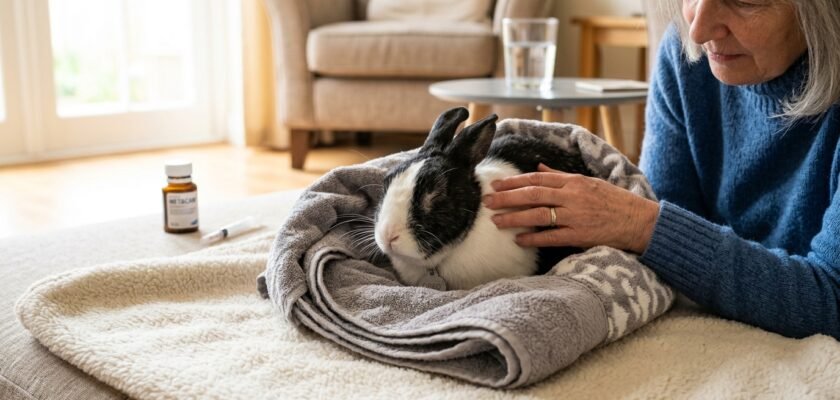
Quick Answer: What Causes Head Tilt in Older Rabbits?
Head tilt in rabbits is a clinical sign of vestibular disease (dysfunction of the balance system in the inner ear or brain). In older bunnies, the two most common causes are the microscopic protozoan parasite Encephalitozoon cuniculi (E. cuniculi) and a deep inner or middle ear infection (otitis interna/media).
While the sudden rolling and tilted neck look terrifying, most rabbits do not die from head tilt. The true danger is secondary gut stasis when extreme dizziness stops them from eating. With prompt veterinary medication and dedicated home nursing, many older rabbits recover substantial balance or adapt happily to a permanent tilt.
Key Takeaways for Senior Rabbit Owners
- Head tilt is a symptom, not a diagnosis: It indicates vestibular disturbance, most often triggered by dormant E. cuniculi spores flaring up or bacterial otitis.
- Seek same-day veterinary care: Early intervention with antiparasitics, anti-inflammatories, or antibiotics significantly boosts recovery odds.
- Gut stasis is the greatest immediate threat: Dizzy rabbits stop eating and drinking quickly. Assisted feeding with recovery formula prevents fatal hepatic complications.
- Create a padded, roll-safe recovery nest: Rolled towels, non-slip fleece, and low barrier edges prevent traumatic eye and musculoskeletal injuries during rolling episodes.
- A residual tilt does not mean poor quality of life: Rabbits possess incredible neurological plasticity and often hop, groom, and play normally with an angled head.
Table of Contents
- 1. What Head Tilt Looks Like: Recognizing Vestibular Signs
- 2. The Main Causes: E. Cuniculi vs Inner Ear Infections
- 3. Why Senior Rabbits Are Especially Vulnerable
- 4. Immediate Action Checklist: What to Do and What to Avoid
- 5. How Vets Diagnose the Underlying Cause
- 6. Veterinary Treatment Protocols for Head Tilt
- 7. Home Nursing Care: Safe Housing, Eye Protection, and Nutrition
- 8. Will My Rabbit Die from Head Tilt? Survival and Prognosis
- 9. Living with a Permanent Head Tilt: Long-Term Quality of Life
- 10. Prevention and Hygiene Protocols
- 11. Frequently Asked Questions
- 12. The Bottom Line and Veterinary Disclaimer
1. What Head Tilt Looks Like: Recognizing Vestibular Signs
The first time you see head tilt in your rabbit, the shock is visceral. You wake up to discover your bunny holding their head cocked to one side. In mild cases, it appears as a slight, inquisitive tilt. In severe presentations, the ear touches the ground, and the animal cannot stay upright.
Veterinarians refer to this condition as vestibular disease, or historically as torticollis and wry neck. It occurs when the vestibular apparatus (the delicate biological gyroscopes in the inner ear and brainstem that govern spatial balance) malfunctions. Your rabbit experiences violent, unceasing vertigo.
Common clinical signs accompanying head tilt include:
- Loss of balance: Leaning heavily or falling sideways toward the direction of the tilt.
- Involuntary rolling: Spinning uncontrollably along the floor when trying to take a hop.
- Horizontal or rotary nystagmus: Eyes flicking rapidly side-to-side or rotating in circles.
- Circling: Hopping persistently in tight circles toward the affected side.
- Appetite refusal: Severe motion sickness making food and water impossible to swallow.
- Rear limb weakness or urine leakage: Wet fur around the hindquarters from inability to posture cleanly.
2. The Main Causes: E. Cuniculi vs Inner Ear Infections
While trauma or strokes can trigger balance problems, two culprits account for the vast majority of cases in pet rabbits:
1. Encephalitozoon Cuniculi (E. Cuniculi)
Encephalitozoon cuniculi is an obligate intracellular microsporidian parasite. Serological surveys demonstrate that over 50 percent of domestic pet rabbits carry antibodies to this parasite. Most rabbits contract spores early in life from their mother or contaminated bedding, carrying the organism quietly in their nervous tissue and renal tubules without overt illness.
When a rabbit experiences age-related immune decline or acute stress, the spores rupture within host cells, triggering granulomatous inflammation. In the central nervous system, this inflammation damages the vestibular nuclei, causing sudden head tilt, hind-limb paresis, and neurological deficits. In the kidneys, it contributes to chronic renal disease and urinary incontinence.
2. Middle or Inner Ear Infection (Otitis Media/Interna)
A bacterial infection deep inside the tympanic bulla can directly inflame the vestibulocochlear nerve and semicircular canals. Lop-eared breeds (such as Holland Lops and Mini Lops) are genetically predisposed because their folded, drooped ear canals trap moisture, wax, and opportunistic bacteria like Pasteurella multocida or Pseudomonas.
Crucially, deep middle ear infections often present with zero external discharge. The outer ear canal may appear spotless during a surface exam even while an abscess festers behind the eardrum.
3. Less Common Vestibular Causes
Less frequent triggers include intracranial brain tumors, cerebral vascular accidents (strokes), blunt head trauma from falls, and heavy metal toxicosis from chewing lead-based paints or antique furniture.
3. Why Senior Rabbits Are Especially Vulnerable
While a rabbit can contract head tilt at any life stage, rabbits over six years old face unique physiological hurdles:
- Immunosenescence: Aging immune systems struggle to suppress dormant protozoal colonies, allowing E. cuniculi to multiply aggressively.
- Compromised renal reserve: E. cuniculi attacks both the brain and the kidneys. Senior rabbits often have pre-existing subclinical renal decline, making fluid balance precarious.
- Rapid descent into stasis: Elderly rabbits carry less glycogen reserve. If nausea prevents eating for just 12 to 24 hours, they rapidly enter life-threatening gastrointestinal stasis.
- Degenerative arthritis: Stiff spinal and hip joints make steadying themselves during a dizzy spell almost impossible, leading to rapid panic and traumatic rolls.
4. Immediate Action Checklist: What to Do and What to Avoid
If your bunny suddenly tilts or starts rolling, immediate handling determines whether they stay safe until reaching the clinic:
| Safe Immediate Steps (Do This) | Dangerous Home Actions (Avoid This) |
|---|---|
| Confine to a padded carrier: Place them in a snug pet carrier lined with rolled towels to brace their sides and stop rolling. | Never leave in an open multi-level cage: High ramps, wire shelving, and wide spaces result in broken bones or severe eye scratches. |
| Call a rabbit-savvy vet today: Same-day medication drastically improves neurological stabilization. | Never wait overnight to observe: Vertigo triggers immediate anorexia; waiting 24 hours invites fatal liver shutdown. |
| Keep lighting dim and sound quiet: Reducing sensory stimulation calms vestibular spinning and lowers stress hormones. | Never hold upside-down or flip: Inverting a vestibular rabbit causes violent panic attacks and spinal dislocation. |
| Place water and greens right at nose level: Offer wet cilantro or parsley directly against their mouth on floor level. | Never force fluids into a rolling rabbit: Syringing liquids while actively spinning risks fatal pulmonary aspiration. |
| Bring their bonded mate along: Having their familiar companion sitting quietly beside them reduces clinic transit shock. | Never administer human drugs: Aspirin, paracetamol, and ibuprofen are toxic to lagomorph organs. |
5. How Vets Diagnose the Underlying Cause
Because an inner ear infection and E. cuniculi present with identical head tilting and rolling, a thorough clinical evaluation is essential. An exotic veterinarian will typically perform:
- Otoscopic examination: Inspecting the ear canal for inflammation, wax impaction, or ruptured tympanic membranes.
- Neurological assessment: Evaluating cranial nerve reflexes, postural reactions, and nystagmus direction to localize the lesion to peripheral or central pathways.
- E. cuniculi antibody titers: Measuring IgG and IgM antibody levels. An elevated IgM indicates an active, acute infection, while high IgG reflects past chronic exposure.
- Biochemical blood panels: Checking blood urea nitrogen (BUN) and creatinine to evaluate renal health before initiating antiparasitic protocols.
- Skull radiographs or CT scan: Computed tomography is the gold standard, providing detailed cross-sectional views of the bony tympanic bullae to detect deep pus accumulation.
6. Veterinary Treatment Protocols for Head Tilt
Because definitive diagnostic test results can take several days, rabbit veterinarians frequently begin multi-modal therapy immediately to protect both the brain and the gut:
| Medication / Therapy | Clinical Mechanism & Purpose | Typical Course |
|---|---|---|
| Fenbendazole (Panacur) | Benzimidazole antiparasitic that halts microtubule formation in active E. cuniculi organisms. | 28 consecutive days |
| Anti-Inflammatory (Meloxicam) | Reduces severe inflammatory edema in brain tissue and the inner ear, relieving neurological pressure. | 10 to 21+ days as needed |
| Targeted Antibiotics | Penetrates bony bullae to eradicate bacterial otitis (e.g., enrofloxacin, marbofloxacin, azithromycin). | 3 to 6 weeks |
| Antivertigo / Anti-Nausea | Meclizine or maropitant (Cerenia) dampens inner ear motion signals, easing dizziness so bunnies can swallow. | First 5 to 10 days |
| Assisted Nutrition (Critical Care) | Syringe feeding high-fiber recovery mash to protect the gut microbiome and stop hepatic lipidosis. | Until voluntary eating resumes |
| Subcutaneous Fluids | Electrolyte hydration flushes renal tubules and supports blood pressure during the acute phase. | Daily during initial crisis |
7. Home Nursing Care: Safe Housing, Eye Protection, and Nutrition
While veterinary medication halts parasite replication and clears bacteria, intensive nursing care at home is what saves your rabbit life. Focus on four core areas:
1. Build a Supportive Towel Nest
Confine your rabbit to a small, single-level enclosure or padded playpen. Roll bath towels into firm bolsters and position them along both sides of your rabbit body like a nest. This gives them tactile physical support to brace against, preventing their balance system from sending false falling signals. Ensure the floor is covered with thick, washable fleece or non-slip runner rugs.
2. Aggressively Protect the Down Eye
With a severe head tilt, one eye is turned directly toward the floor. Because dizzy rabbits blink less frequently and constantly rub that side against blankets, corneal ulcers develop rapidly. Check the eye twice daily for cloudiness or discharge. Ask your veterinarian for preservative-free lubricating artificial tears or ophthalmic gel, applying it three to four times daily.
3. Master Slow, Safe Syringe Feeding
If your bunny is not eating voluntarily, prepare high-fiber recovery formula with warm water. Wrap your rabbit snugly in a towel (the “bunny burrito”) to stabilize their shoulders and head. Insert the syringe tip gently behind the front incisors into the cheek gap, administering no more than 0.5 to 1.0 ml at a time. Allow them to chew and swallow fully. Complement this with aromatic, moist greens like fresh cilantro and dill from our senior rabbit safe foods guide.
4. Prevent Urine Scald and Sore Hocks
Lying sideways makes proper urination posture difficult. Urine easily soaks into the belly fur, leading to painful chemical dermatitis (urine scald) and ulcerated feet. Layer absorbent puppy training pads beneath a top layer of vet bedding that wicks urine downward, and review our clinical strategies on preventing sore hocks in aging rabbits. For hygiene, switch to an accessible low-entry rabbit litter box.
8. Will My Rabbit Die from Head Tilt? Survival and Prognosis
When pet parents first witness violent rolling and rapid eye flicking, many assume their beloved bunny is actively dying or having a massive fatal seizure. The clinical reality is much more hopeful: head tilt itself is rarely a fatal condition.
Mortality associated with head tilt stems almost entirely from secondary complications:
- GI stasis and hepatic lipidosis: Caused by prolonged anorexia from severe motion sickness.
- Physical trauma: Spinal injury, skull fractures, or severe corneal rupture from unchecked thrashing.
- Advanced kidney failure: In cases where E. cuniculi has extensively scarred renal tissues.
Veterinarians strongly urge owners not to rush into euthanasia during the initial 48 to 72 hours. Rabbits frequently experience an acute crisis phase where symptoms look horrific, followed by steady neurological compensation over the subsequent 14 to 28 days as anti-inflammatory and antiparasitic medications suppress active pathology.
9. Living with a Permanent Head Tilt: Long-Term Quality of Life
While some rabbits achieve full neurological recovery and return their heads completely upright, many retain a mild or moderate residual tilt (often 15 to 45 degrees) for the remainder of their lives.
A permanent head tilt does not mean a compromised quality of life. The mammalian brain possesses remarkable compensatory ability. Once vestibular vertigo subsides, the rabbit visual and proprioceptive systems recalibrate “level ground.” Tilted bunnies quickly learn to groom, run, binky, beg for greens, and cuddle happily with their bonded mates.
To support a rabbit with a chronic tilt, keep their living environment consistent. Keep food, water crocks, and litter trays in the exact same positions, maintain continuous floor traction with textured rugs, and avoid introducing high obstacle courses or stairs.
10. Prevention and Hygiene Protocols
Because E. cuniculi spores are shed via infected urine, diligent environmental sanitation reduces exposure within multi-rabbit households:
- Frequent litter box sanitizing: Spores are vulnerable to 70 percent ethanol, 10 percent bleach solutions, and steam cleaning. Empty litter boxes daily.
- Treat bonded companions simultaneously: If one rabbit is diagnosed with active E. cuniculi, consult your vet about treating their bonded partner with a 28-day fenbendazole course to clear shared shedding.
- Keep hay off floor surfaces: Use wall-mounted or clean elevated hay mangers so forage never comes into contact with urine dampness.
- Practice good hand hygiene: While transmission to healthy humans is extraordinarily rare, immunocompromised individuals should avoid handling rabbit urine or uncleaned litter pans.
11. Frequently Asked Questions
Click below to expand clinical answers to common questions about senior rabbit head tilt and E. cuniculi:
Will my rabbit die from head tilt?+
How long can a rabbit live with E. cuniculi?+
Is head tilt in rabbits contagious to other pets?+
How long does it take for a rabbit to recover from head tilt?+
Can head tilt flare up again later?+
Should I separate my head tilt rabbit from their bonded partner?+
Why are my rabbit eyes flicking back and forth?+
Is my rabbit in severe pain with head tilt?+
12. The Bottom Line
Discovering your senior rabbit with a head tilt is an alarming, emotionally challenging experience. Yet with prompt veterinary intervention, targeted medication, safe padded confinement, and dedicated nutritional support, many senior rabbits make remarkable recoveries.
Do not give up in the first few days. Give the medication time to work, protect that downward eye, keep their gut moving, and consult an exotic animal veterinarian immediately. Senior rabbits are remarkably resilient when given the supportive care they deserve.
Veterinary Medical Notice: This article provides educational information for rabbit caregivers and is not a substitute for clinical veterinary diagnosis, imaging, or medical treatment. If your rabbit exhibits sudden head tilt, loss of balance, eye flicking, or anorexia, seek immediate care from a qualified rabbit-savvy veterinarian.

