


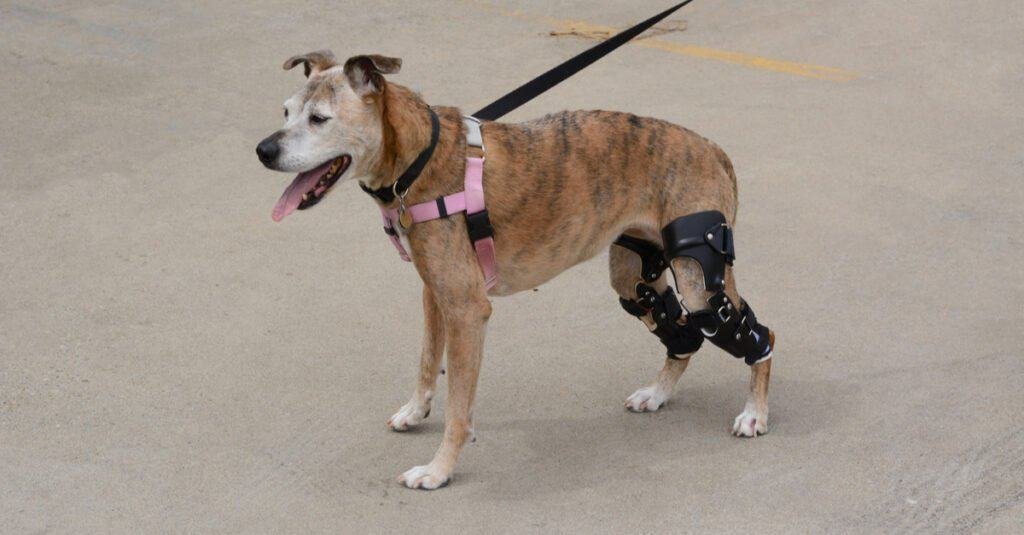
This guide covers everything you need to know, from causes to home exercises to when it is time to call your vet.
Quick Answer: How to Help a Senior Dog with Weak Back Legs
- See your vet to identify the underlying cause (arthritis, degenerative myelopathy, IVDD, etc.)
- Start gentle, low-impact exercises like sit-to-stand reps and short controlled walks
- Add vet-approved joint supplements such as glucosamine and omega-3 fatty acids
- Make home modifications: non-slip mats, ramps, raised food bowls
- Consider physical therapy, hydrotherapy, or acupuncture for advanced cases
- Use a rear-support harness or dog wheelchair if your dog cannot bear weight independently
Why Do Senior Dogs Develop Weak Back Legs?

Back leg weakness is one of the most common concerns for owners of aging dogs, and it rarely has a single, simple cause. Understanding what is happening inside your dog’s body is the first step toward helping them feel better and move more freely.
🦴 Osteoarthritis (DJD)
Cartilage in the hips, knees, and ankles wears down over time, causing pain and stiffness that makes weight-bearing increasingly difficult. The most common cause in senior dogs.
🧠 Degenerative Myelopathy
A progressive spinal cord disease affecting large breeds (German Shepherds, Labs, Boxers). Starts as subtle paw dragging and advances slowly. Not painful, but not reversible.
💪 Muscle Atrophy (Sarcopenia)
Natural muscle loss accelerated by inactivity and joint pain. Visible as a noticeably thinner rear end. Can be significantly improved with targeted exercise.
🔩 IVDD & Hip Dysplasia
Disc disease compresses spinal nerves causing weakness or partial paralysis. Hip dysplasia creates instability and worsens through senior years as secondary arthritis develops.
Signs Your Senior Dog’s Back Legs Are Getting Weak

Early detection gives you more time and more options. Watch closely during daily walks.
Catching the early warning signs gives you more time and more options. Look for any of the following changes in your dog’s movement or behavior:
- Difficulty or reluctance to rise from a lying position
- Swaying or wobbling when standing still or walking
- Dragging one or both back paws along the ground
- Bunny-hopping gait (using both back legs together instead of alternating)
- Reluctance to climb stairs, jump into the car, or get on furniture
- Visibly slimmer or thinner hind end compared to the front of the body
- Collapsing suddenly after short walks or light activity
- Whimpering, licking, or chewing at the hips, spine, or back legs
- Loss of interest in walks or play that they previously enjoyed
At-Home Exercises to Strengthen Senior Dog Hind Legs

Once your vet has assessed the cause and cleared your dog for gentle activity, consistent at-home exercise is one of the most powerful tools you have. The goal is not to push your dog hard. The goal is to keep them moving, keep blood flowing to stiff joints, and slow the loss of muscle in the hind end.
🐕 Sit-to-Stand Repetitions
Ask your dog to sit, then immediately stand, then sit again. Repeat 5 to 10 times. This is the canine equivalent of a squat and directly targets the rear leg muscles. You can make it harder by placing front paws on a low step so more weight transfers to the hindquarters.
🚶 Short Controlled Walks
Skip the long park walks for now. Instead, do 2 to 3 short walks of 5 to 10 minutes each day on flat, even ground. Consistent gentle movement is far better than occasional intense exercise for rebuilding hind leg muscle in older dogs.
🌊 Towel-Assisted Walking
Slide a rolled towel or a rear-support sling under your dog’s belly just in front of the back legs. Gently support their weight while they walk, allowing them to practice normal leg movement without the full burden of supporting themselves. Even 3 to 5 minutes daily makes a real difference.
⚖️ Balance and Weight-Shifting
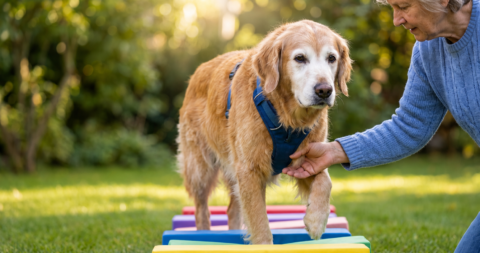
Have your dog stand on a non-slip yoga mat or a slightly unstable surface like a folded blanket. Gently rock them side to side, or place a treat to one side to encourage a weight shift. This activates the stabilizing muscles deep in the hips and improves coordination.
💆 Rear Leg Massage
A few minutes of gentle massage along the hamstrings and gluteal muscles each day helps loosen tight tissue, improve circulation, and reduce inflammation. Most dogs find it deeply relaxing. Work from the hip down toward the paw using slow, circular strokes.
🏊 Hydrotherapy (Water Exercise)
Swimming or underwater treadmill therapy is one of the best exercises for dogs with hind leg weakness. Water provides natural resistance to build muscle while dramatically reducing joint stress. Many veterinary rehabilitation centers offer this, and some senior dogs genuinely love it.

Hydrotherapy builds muscle with zero joint stress — a favourite for senior dog rehabilitation programs.
Best Supplements for Senior Dogs with Weak Hind Legs

Diet and supplementation play a major supporting role alongside exercise. The right supplements can reduce joint inflammation, support cartilage repair, and help maintain muscle mass in aging dogs.
| Supplement | Primary Benefit | Notes |
|---|---|---|
| Glucosamine & Chondroitin | Supports cartilage integrity and reduces joint pain | Most widely studied and recommended by vets for senior dogs |
| Omega-3 Fatty Acids (Fish Oil) | Reduces inflammation in joints and muscles | Use marine-sourced omega-3 (EPA and DHA), not flaxseed |
| MSM (Methylsulfonylmethane) | Anti-inflammatory, supports joint function | Often combined with glucosamine in joint formulas |
| CBD Oil (Canine-Grade) | Pain and inflammation management | Consult your vet; dosage matters greatly by body weight |
| Protein-Rich Senior Diet | Slows muscle atrophy, supports tissue repair | Many senior dog foods underestimate protein needs; ask your vet |
Home Modifications That Make a Huge Difference

Your home environment can either fight against your senior dog’s mobility or actively support it. A few inexpensive changes can reduce falls, relieve joint stress, and give your dog more independence.
- Non-slip rugs and runners on all hard floors where your dog spends time
- Dog ramps or steps to the couch, bed, or car instead of jumping
- Orthopedic memory foam bed placed low to the ground for easy entry and exit
- Raised food and water bowls to reduce neck and spine strain while eating
- Rear-support harness for daily walks so you can lend assistance on stairs or rough ground
- Dog socks or booties with grip pads to prevent slipping on smooth surfaces
- Night lights near sleeping areas to help disoriented senior dogs navigate safely
When to See a Vet and What to Expect

Home care is powerful, but it works best alongside professional veterinary guidance. You should schedule an appointment if your dog shows any of the following signs, regardless of whether the weakness came on suddenly or gradually.
During your visit, your vet will likely perform a full physical and neurological exam, checking reflexes, joint range of motion, and gait. They may recommend blood panels to rule out metabolic causes, X-rays to assess joint health and spinal changes, or in more complex cases, an MRI or referral to a veterinary neurologist.
Treatment will depend on the diagnosis. Osteoarthritis is typically managed with anti-inflammatory medications (NSAIDs), supplements, weight management, and physiotherapy. Degenerative myelopathy has no cure but benefits enormously from daily exercise. Severe IVDD may require surgery. The important thing is to get a clear picture of what is happening before committing to a home treatment plan.
Frequently Asked Questions
The Bottom Line
A senior dog with weak back legs is not a dog who has given up. With the right care, most older dogs can stay active, comfortable, and genuinely happy for years beyond the point their symptoms first appear.
Start with a vet visit to understand what you are dealing with, commit to daily gentle exercise, clean up your home environment, and give your dog the right nutritional support. Small, consistent steps add up faster than you might expect. Your dog has given you years of loyalty. You have everything it takes to give them their best possible senior years in return.



9 thoughts on “How to Help a Senior Dog with Weak Back Legs”