
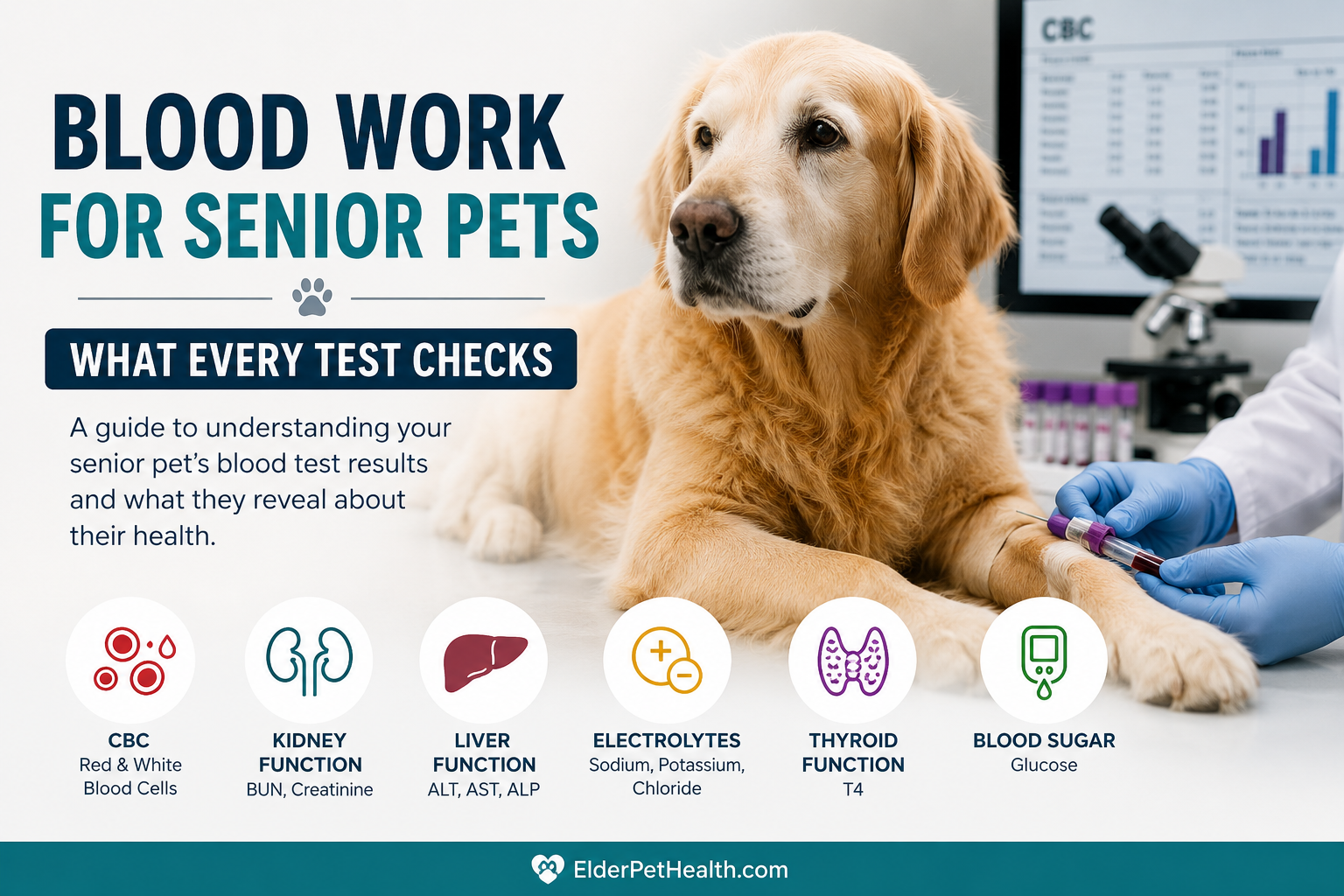
Blood Work for Senior Pets: What Every Test Checks
Blood work for senior pets is one of the most valuable tools available for catching serious problems before they become emergencies. This guide explains exactly what each test checks, what abnormal results mean, and why certain conditions show up in blood before they show up as symptoms.
Why Senior Pet Blood Work Matters
- CBC (Complete Blood Count): red cells, white cells, platelets, anaemia, infection, clotting
- BUN and creatinine: kidney function
- ALT and ALP: liver health
- Glucose: diabetes screening
- Total protein and albumin: nutrition and liver/gut health
- T4 (thyroxine): thyroid function, especially cats
- Electrolytes: sodium, potassium, calcium balance
Complete Blood Count: What It Checks
The CBC gives a snapshot of all three types of blood cells and what they are doing.
Red blood cells (RBC) and haematocrit: Red cells carry oxygen. A low count means anaemia. Senior pets develop anaemia for many reasons including kidney disease (kidneys produce the hormone that stimulates red cell production), chronic disease, blood loss, or bone marrow problems. Anaemia explains lethargy, weakness, and pale gums.
White blood cells (WBC): White cells are the immune system’s soldiers. Elevated counts suggest infection, inflammation, or stress. Very low counts suggest immune suppression or bone marrow disease. A moderately elevated count in a senior dog can indicate something as simple as excitement at the vet or something as serious as infection or cancer.
Platelets: Platelets allow blood to clot. Low platelet counts cause unusual bruising or slow-healing wounds. Some tick-borne diseases cause platelet drops in senior dogs who have spent time outdoors.
Anaemia in senior cats is far more common than most owners realise. A 2012 study found that approximately 30% of cats over 11 years of age had some degree of anaemia. Most showed minimal obvious symptoms because cats are extremely good at adapting to gradual changes. The blood test reveals what the cat’s behaviour conceals.
Biochemistry Panel: Organs and Metabolism
BUN and Creatinine
Kidney waste products that build up in blood when kidneys fail. Elevation signals reduced kidney filtering capacity. SDMA is a newer, more sensitive marker that rises earlier than creatinine.
ALT and ALP
Liver enzymes. ALT rises when liver cells are damaged. ALP rises with bile duct problems or steroid use. Both can be mildly elevated in senior pets for various reasons and must be interpreted in context.
Glucose
Blood sugar. Persistently elevated glucose indicates diabetes. In cats, single readings can be elevated due to stress at the vet. Fructosamine is a better test for confirming actual diabetes rather than stress-related spikes.
Total Protein and Albumin
Low albumin indicates problems with liver production, kidney protein loss, gut absorption, or inadequate nutrition. It affects how medications are distributed in the body, making it important for senior pets on multiple drugs.
Thyroid Test: Essential for Senior Cats
The T4 test measures thyroxine, the main thyroid hormone. In cats over 10, hyperthyroidism (too much T4) is the most common endocrine disease. Signs include weight loss despite good appetite, increased thirst and urination, hyperactivity in an older cat, and vomiting.
Hypothyroidism (too little T4) is far more common in dogs than cats and causes the opposite: weight gain, lethargy, coat changes, and slow heart rate. Both conditions are very manageable once identified.
Why Urine Is Tested Alongside Blood
Blood work and urinalysis together tell a more complete story than either alone. The kidneys’ job is to concentrate urine. If a dog or cat is drinking and urinating excessively, measuring the concentration of the urine shows how hard the kidneys are working to maintain it.
Protein in the urine alongside normal blood kidney values can be an early warning of kidney disease before creatinine rises. Glucose in the urine alongside normal blood glucose suggests the kidneys are not filtering correctly. Bacteria or white cells in urine indicate infection.
How to Read Results at Home
Most vets recommend annually from age 7 in dogs and age 10 in cats, or sooner for breeds prone to specific conditions. For pets already diagnosed with kidney disease, liver disease, diabetes, or thyroid problems, testing every 3 to 6 months is standard. For pets on long-term NSAIDs, kidney values should be checked every 6 months. The frequency depends on what the results show and what conditions are being managed.
For most comprehensive panels, yes. A 6 to 8 hour fast is standard. This prevents lipemia (fat in the blood from a recent meal) from interfering with test results, particularly liver enzymes and glucose. Water is fine right up to the appointment. Check with your vet when booking the appointment as specific requirements vary.
Normal blood work is genuinely reassuring but does not rule out everything. Pain does not show up on a blood panel. Early arthritis, dental disease, and some cancers can be present with entirely normal blood values. If your pet seems unwell and blood work is normal, discuss what other diagnostics are appropriate, including X-rays, ultrasound, or specific disease testing.
The Bottom Line
Senior pet blood work is not just a formality. It is one of the most powerful tools available for catching serious conditions before they become emergencies.
Keep your previous results, ask for trend comparisons, and make sure you understand what each flagged value means for your specific pet. Annual blood work for a senior dog or cat costs less than most emergency vet visits and frequently prevents the need for them.


[…] 🔬 Why X-rays are essential. A visual exam alone cannot reveal what is happening below the gumline, where tooth resorption and bone loss hide. This is why proper feline dental assessment requires dental X-rays under anesthesia or sedation. Your cat could look fine on the surface while a tooth is being painfully resorbed underneath. 🩺 Related Guide on Elder Pet HealthBlood Work for Senior Pets: What Every Test Checks Before Ane… […]
[…] 🧪 Related Guide on Elder Pet HealthBlood Work for Senior Pets: What Every Test Checks → […]
[…] bloods are inconclusive 🧪 Related Guide on Elder Pet HealthBlood Work for Senior Pets: What Every Test Checks → ⚠️ If the first round of tests comes back normal, do not stop there. Early hyperthyroidism and […]
[…] Prevents a missed diagnosis 🧪 Related Guide on Elder Pet HealthBlood Work for Senior Pets: What Every Test Checks ͛… […]
[…] Related Guide on Elder Pet HealthBlood Work for Senior Pets: What Every Test Checks → […]