
Quick Answer: Best Dog Wheelchairs for Rear Leg Weakness
For senior dogs suffering from degenerative myelopathy (DM), severe hip arthritis, or intervertebral disc disease (IVDD), the Walkin’ Wheels Rear Support Wheelchair is the premier veterinary choice. Fully adjustable in height, length, and width with push-button detents, it accommodates changing muscle mass and allows unassisted urination and defecation. For budget-conscious families, the Best Friend Mobility Cart provides durable aircraft aluminum framing at half the cost. When forelimb weakness develops alongside hind paralysis, the Walkin’ Wheels Quad (4-Wheel) supplies full-body four-wheel stability. For precision orthopedic fit, K9 Carts delivers veterinarian-designed aircraft cabling.
Key Clinical Takeaways for Caregivers
- Maintain Front Limb Strength: Rear support carts require adequate bilateral forelimb strength. If your dog’s front legs buckle or tremble under load, upgrade to a full-support four-wheel (quad) cart.
- Fold of Flank Measurement: Accurate sizing depends on measuring the distance from the thin skin web connecting the thigh to the flank down to the bottom of the paw pad with the dog lying flat.
- Knuckling Prevention: Paralyzed rear paws that drag on concrete suffer painful abrasion wounds and toe infections. Use adjustable stirrups to elevate non-functional paws safely off the ground.
- Normal Elimination Clearance: Quality canine wheelchairs feature pelvic ring rings and neoprene slings that position the perineal area free of obstruction, allowing dogs to urinate and defecate naturally while strapped in.
- Fatigue Management: Begin with 10 to 15-minute daily sessions. Cart mobility builds forelimb shoulder musculature, but overexertion can strain the cervical spine.
Top Recommendations at a Glance
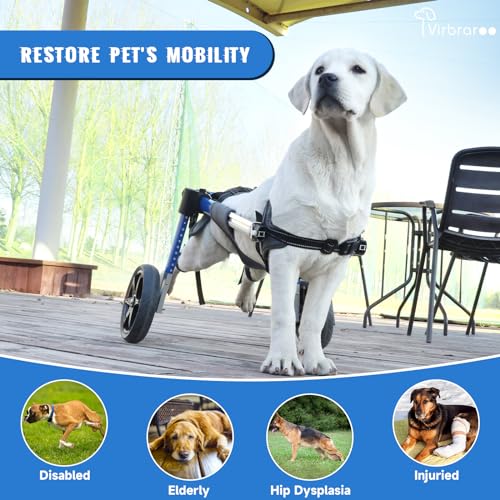
Push-Button Adjustability
Walkin’ Wheels Adjustable Rear Support Dog Wheelchair
$499.00
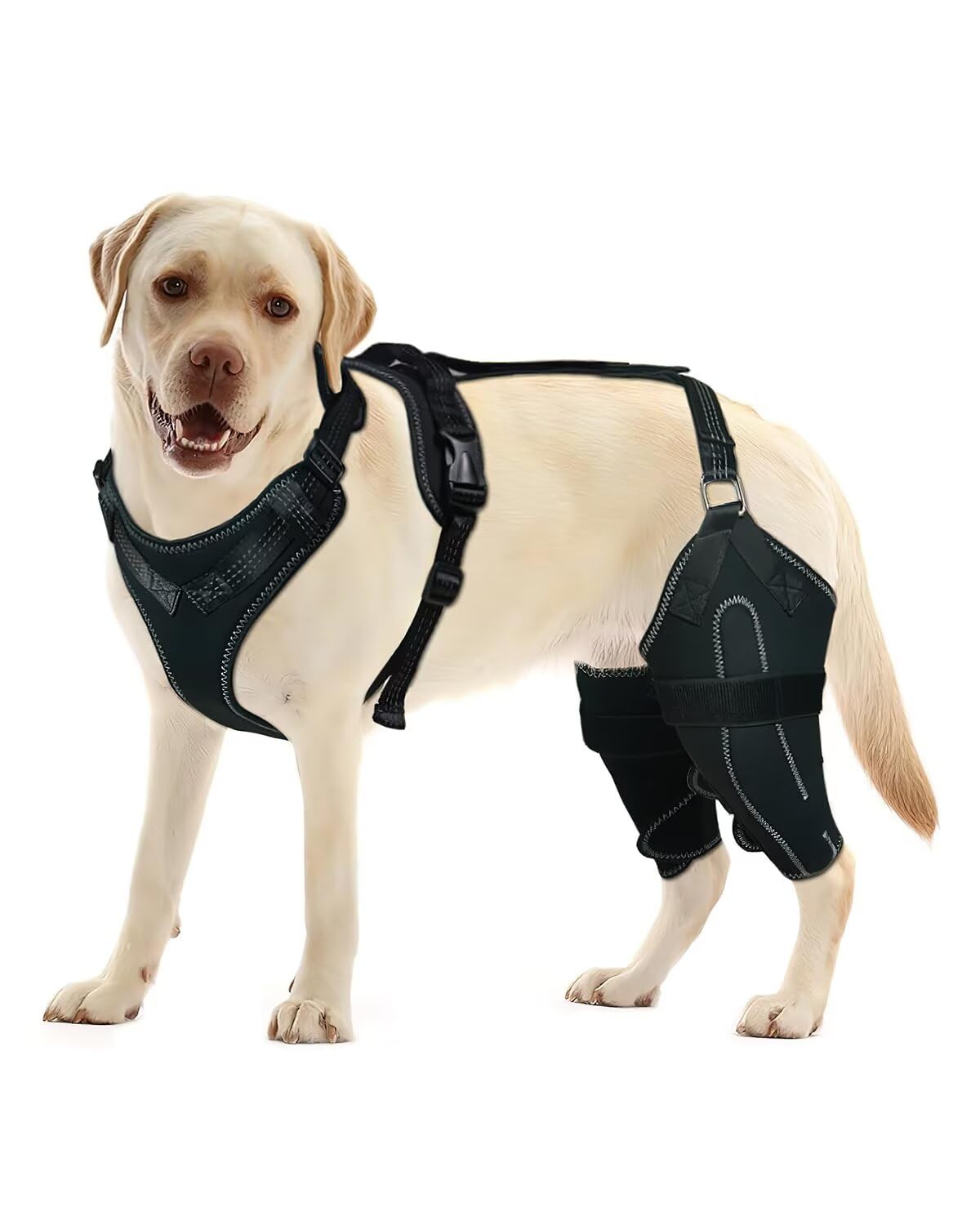
Aircraft Grade Aluminum
Best Friend Mobility Rear Support Dog Wheelchair Cart
$249.00
4-Wheel Full Support
Walkin’ Wheels Full Support Quad Wheelchair (4-Wheel)
$599.00
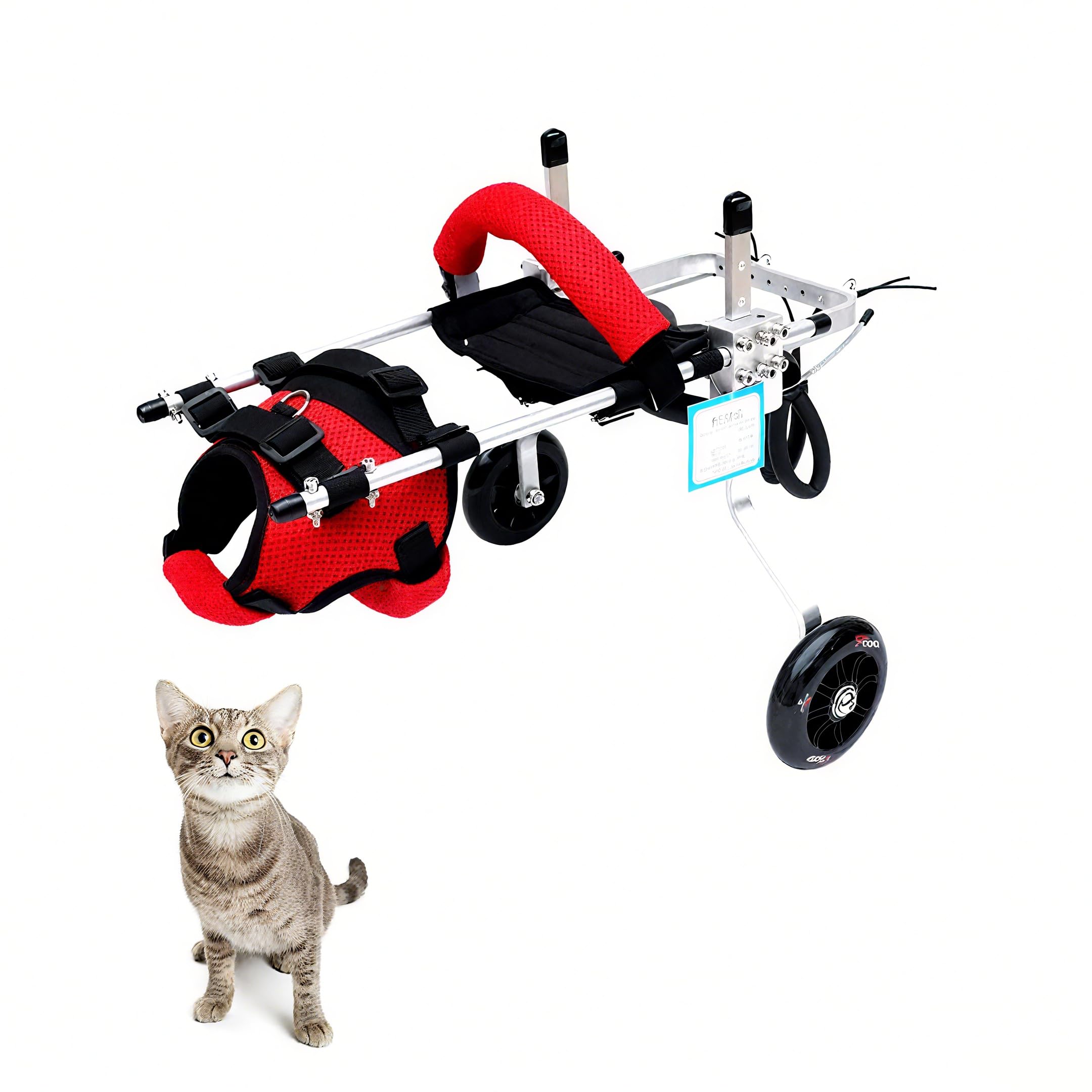
Orthopedic Cable Suspension
K9 Carts Custom Rear Support Wheelchair
$389.00

Lightweight Aluminum Alloy
HobeyHove Adjustable Dog Cart for Hind Legs
$159.00
Table of Contents
- Canine Hind Leg Weakness: Understanding DM, IVDD, and Hip Osteoarthritis
- How to Measure Your Dog: The Fold of Flank Protocol
- 5-Product Clinical Comparison Matrix
- The 5 Best Dog Wheelchairs (Detailed Reviews)
- Wheelchair Acclimation and Gait Retraining Protocol
- When to Upgrade from 2-Wheel Rear to 4-Wheel Quad Cart
- Frequently Asked Questions
Canine Hind Leg Weakness: Understanding DM, IVDD, and Hip Osteoarthritis
Progressive hind limb weakness in senior dogs is among the most emotionally challenging developments for pet caregivers. Conditions such as Degenerative Myelopathy (DM), chronic Intervertebral Disc Disease (IVDD), severe bilateral hip osteoarthritis, and lumbosacral stenosis disrupt nerve signals and compromise musculoskeletal weight-bearing. Dogs often begin by scuffing their rear toenails (knuckling), cross their back legs when standing, and eventually lose the ability to support their pelvis. To understand progressive causes and early staging protocols, consult our detailed clinical guide on how to help a senior dog with weak back legs.
A properly calibrated rear-support wheelchair takes the compressive load off the lumbar spine and pelvic joints. For dogs displaying compensatory spinal curvature, our companion guide on senior dog hunched back treatment covers pain recognition and posture management. By elevating the rear pelvis into a natural horizontal spinal orientation, the wheelchair allows dogs to use their remaining front leg power to propel themselves forward, preventing muscular atrophy and encouraging mental engagement during daily walks.
How to Measure Your Dog: The Fold of Flank Protocol
Selecting the correct cart size requires three precise anatomical measurements taken while your dog is lying flat on their side:
- Fold of Flank to Toe (Rear Leg Height): Measure from the thin skin crease where the thigh joins the abdomen straight down to the bottom of the paw pad. Do not stretch the leg rigidly; keep the natural slight bend in the hock.
- Armpit to Rump (Torso Length): Measure from the back crease of the front armpit along the ribcage to the base of the tail. This dictates side-strut clearance.
- Widest Point of Chest and Rump (Torso Width): Measure across the widest point of the pelvis and chest using a rigid ruler. The frame must provide at least 1 to 1.5 inches of clearance on each side to prevent skin chafing.
5-Product Clinical Comparison Matrix
| Product | Configuration | Weight Range | Frame Material | Key Feature | Price |
|---|---|---|---|---|---|
| Walkin’ Wheels Rear Support | 2-Wheel Rear | 50 to 140 lbs | Extruded Aluminum | Push-button tool-free adjustment | $499.00 |
| Best Friend Mobility Cart | 2-Wheel Rear | 40 to 100 lbs | Aircraft Aluminum | Welded dual-bearing wheels, great value | $249.00 |
| Walkin’ Wheels Quad Cart | 4-Wheel Full | 50 to 120 lbs | Extruded Aluminum | Full forelimb & hindlimb support | $599.00 |
| K9 Carts Custom Rear | 2-Wheel Rear | 25 to 110 lbs | Aviation Alloy | Vet designed, contoured pelvic rings | $389.00 |
| HobeyHove Adjustable Cart | 2-Wheel Rear | 30 to 80 lbs | Light Aluminum | Budget friendly, ultra-lightweight frame | $159.00 |
The 5 Best Dog Wheelchairs (Detailed Reviews)
★★★★★ Top Recommendation
1. Walkin’ Wheels Adjustable Rear Support Dog Wheelchair
The Walkin’ Wheels Rear Support Wheelchair is the premier mobility system prescribed by veterinary orthopedic specialists and canine physical therapists. Unlike custom-welded carts that cannot be modified when a dog gains or loses weight, the Walkin’ Wheels frame uses push-button snap pins. As degenerative myelopathy progresses and thigh muscle mass decreases, caregivers can micro-adjust the frame dimensions in seconds without tools.
Its dense polyurethane foam wheels roll effortlessly over grass, gravel, and asphalt without the risk of trail punctures. Crucially, the rear neoprene support sling and stirrup harness leave the entire perineal zone open, permitting male and female dogs to eliminate naturally while remaining strapped into the cart during walks.
- Tool-free push button adjustment accommodates changing muscle mass.
- Never-flat dense foam wheels roll easily over lawn grass and gravel.
- Comfortable rear stirrups elevate knuckling paws to stop abrasions.
- Can be upgraded into a 4-wheel quad cart if front limb weakness develops.
- Higher initial price point compared to generic imports.
- Requires initial patience to adjust strap tensions evenly across both sides.
★★★★★ Outstanding Value
2. Best Friend Mobility Rear Support Dog Wheelchair Cart
The Best Friend Mobility Cart provides industrial-grade structural durability without the premium price tag. Constructed from heat-treated aircraft aluminum alloy, the frame is extremely rigid and will not flex or bow when a heavy Labrador or Boxer makes sudden pivots.
Each wheel is equipped with sealed precision bearings that keep out dirt, sand, and moisture during wet outdoor strolls. The padded neoprene rear saddle cradles the dog’s pelvic floor smoothly, preventing pressure necrosis and chaffing along the delicate groin and inner thigh areas.
- Heavy-duty aircraft aluminum frame offers outstanding structural rigidity.
- Sealed ball bearings ensure effortless wheel roll on outdoor surfaces.
- Comfortable padded harness cradles the pelvis to protect delicate skin.
- Significantly more affordable than competing veterinary brands.
- Frame adjustment requires loosening hex screws instead of using push-buttons.
- Cannot be converted into a four-wheel quad cart later.
★★★★★ Critical Care Pick
3. Walkin’ Wheels Full Support Quad Wheelchair (4-Wheel)
As conditions like Degenerative Myelopathy advance into stage three and four, the neurological loss ascends upward along the spinal cord, eventually impairing thoracic limbs. When a dog in a 2-wheel cart begins stumbling, knuckling their front paws, or tiring after three minutes, a standard rear cart is no longer safe. The Walkin’ Wheels Full Support Quad introduces a front wheel assembly with 360-degree rotating casters.
By supporting 100% of the dog’s body weight along four independent contact points, the Quad cart removes all vertical gravitational strain from both the thoracic and pelvic limbs. Dogs that can barely stand can glide forward with minimal effort, allowing them to remain mobile even in late-stage neurological decline.
- Complete four-wheel support relieves both front and back limb weakness.
- Front caster wheels provide effortless turning and zero tipping risk.
- Maintains horizontal spine alignment to protect against intervertebral disc herniation.
- Allows dogs with advanced DM to continue daily outdoor strolls.
- Larger overall footprint requires dedicated storage space.
- Requires two people or a hoist to load an immobile 90-pound dog safely.
★★★★★ Highly Recommended
4. K9 Carts Custom Rear Support Wheelchair
The K9 Carts Rear Support Wheelchair was engineered directly inside a veterinary orthopedic surgical clinic. While many generic mobility devices use simple hanging fabric loops that can chafe male genitalia or compress the sciatic nerve, K9 Carts uses rigid, foam-sleeved pelvic rings contoured precisely around the canine ischium.
Manufactured in the USA from lightweight aircraft aluminum, the cart maintains an exceptionally low center of gravity. This prevents roll-overs when an active senior dog walks across sloping lawns or steps over curb edges.
- Designed by veterinary surgeons with 40+ years of clinical orthopedic experience.
- Rigid pelvic rings protect against groin chafing and nerve impingement.
- Low center of gravity minimizes tipping risk on sidewalk transitions.
- Customizable strut lengths available for atypical breed body shapes.
- Pelvic rings require precise measurement to avoid loose hip movement.
- Less compact folding capability than the Walkin’ Wheels frame.
★★★★★ Great Value
5. HobeyHove Adjustable Dog Cart for Hind Legs
The HobeyHove Adjustable Dog Cart is a practical, budget-conscious solution for owners facing unexpected veterinary expenses. Weighing less than 7.5 pounds, its lightweight aluminum alloy structure ensures that frail senior dogs do not waste precious muscular energy pulling heavy dead weight.
The cart comes with a soft breathable mesh front harness and adjustable rear stirrup loops to prevent knuckling paw trauma. For post-operative physical rehabilitation following spinal decompression or femoral head ostectomy (FHO), it provides an effective, temporary mobility bridge.
- Highly accessible price point under $160.
- Ultra-lightweight aluminum construction minimizes dragging resistance.
- Includes padded front harness, rear stirrups, and assembly wrenches.
- Excellent for post-operative recovery and temporary rehabilitation.
- Hardware screws require periodic checking and retightening.
- Not recommended for giant-breed dogs weighing over 80 pounds.
Wheelchair Acclimation and Gait Retraining Protocol
Veterinary Gait Rehabilitation Checklist:
- Level the Spine Horizontally: Once your dog is strapped in, inspect their spine from the side. The back line should be completely parallel to the ground. If the pelvis tilts upward, lower the side struts. If the rear dips downward, raise the wheels.
- Verify Toe Contact or Stirrup Clearance: If your dog has residual nerve sensation, allow their toes to lightly touch the ground to encourage reflex walking. If the paws knuckle under completely, elevate the legs inside the padded rear stirrups immediately to avoid skin tears.
- Lure with High-Value Treats: Stand 4 to 5 feet directly in front of your dog with a favorite treat. Encourage them to take two forward steps. Many dogs freeze initially because they feel the weight of the harness. Consistent verbal encouragement breaks this initial hesitation.
- Limit First Week Sessions: Restrict cart sessions to 10 to 15 minutes twice daily during the first week. Dogs rely heavily on their triceps and pectorals to pull the cart, which causes muscle fatigue until conditioning improves.
- Perform Skin Inspections: After every session, unstrap the cart and carefully inspect the groin, armpits, and chest for redness, hair loss, or friction chafing. Adjust strap tensions immediately if redness occurs.
When to Upgrade from 2-Wheel Rear to 4-Wheel Quad Cart
Caregivers managing degenerative conditions like DM must monitor their pet’s forelimbs closely. A 2-wheel rear cart requires functional forelimb strength. Watch for these clinical warning signs that indicate the need for four-wheel quad support:
- Wide-Based Front Stance: Your dog splays their front paws unusually wide to maintain balance when standing still.
- Frequent Front Knuckling: Scuffing front toenails or stumbling during normal turns.
- Head Dropping Below Shoulder Line: Your dog lowers their head toward the floor to shift their center of gravity forward because their shoulders are exhausting.
- Reluctance to Move After 2 Minutes: Freezing or lying down in the cart after just a few yards indicates that front limb muscle power is exhausted.
Frequently Asked Questions: Dog Wheelchairs
Can a dog pee and poop while strapped into a wheelchair?
How long can a senior dog stay in a wheelchair each day?
What should I do if my dog’s back paws drag on the ground?
Will using a wheelchair cause my dog’s rear leg muscles to weaken further?
How do I measure the fold of flank on my dog?
Can a dog use a wheelchair indoors on hardwood floors?
Veterinary Medical Notice: Rapidly progressing hind limb weakness in senior dogs requires thorough veterinary neurological examination to differentiate treatable intervertebral disc herniation from degenerative myelopathy or neoplasia. Never place a dog in an unapproved mobility device without a veterinary diagnosis.

