
Quick Answer: What Blood Tests Do Senior Pets Need?
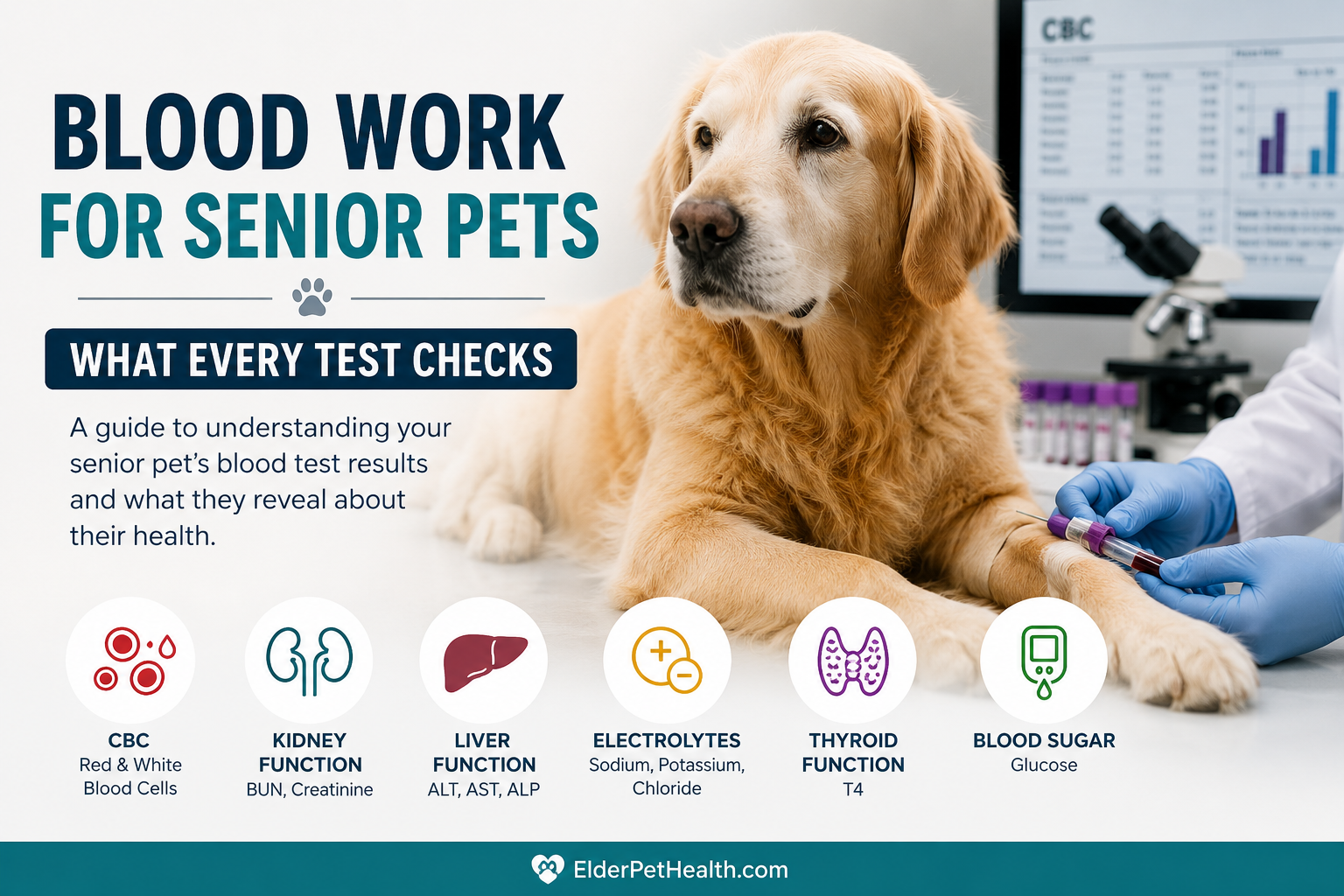
Routine senior pet blood panels primarily evaluate a Complete Blood Count (CBC) and a comprehensive biochemistry profile checking kidney values (BUN, creatinine, SDMA), liver enzymes (ALT, ALP), blood glucose, and electrolytes. These tests establish baselines that uncover metabolic organ disease, diabetes, or early anemia months before clinical symptoms appear.
Key Takeaways for Caregivers
- Most organ diseases are silent until they are advanced. Kidney disease, for example, does not show clinical signs until 75% of kidney function is already lost. Blood work catches the early damage while treatment options are still meaningful.
- Annual results create a personal baseline. A single blood test tells you where your pet is today. A series of annual tests shows trends. A value that is still within the reference range but has doubled over three years is a more important finding than any single number.
- Hyperthyroidism in cats is caught almost exclusively through blood work. The clinical signs overlap with normal aging so completely that owners rarely identify it themselves. A T4 measurement takes seconds and confirms or rules it out immediately.
- Many medications used in senior pets require blood monitoring. NSAIDs for arthritis pain, for example, can affect kidney function over time. Regular blood work catches this early enough to adjust the treatment before damage becomes permanent.
The vet says your 10-year-old dog or cat should have annual blood work done. You agree, they run the tests, and then you get a printout full of abbreviations and numbers with reference ranges. Most of it makes no sense.
Blood work for senior pets is one of the most valuable tools available for catching serious problems before they become emergencies. This guide explains exactly what each test checks, what abnormal results mean, and why certain conditions show up in blood before they show up as symptoms.
Table of Contents
Complete Blood Count: What It Checks
The Complete Blood Count (CBC) provides an immediate quantitative assessment of cellular circulation, immune readiness, and clotting integrity.
Anaemia in senior cats is far more common than most owners realise. A 2012 study found that approximately 30% of cats over 11 years of age had some degree of anaemia. Most showed minimal obvious symptoms because cats are extremely good at adapting to gradual changes. The blood test reveals what the cat’s behaviour conceals.
Biochemistry Panel: Organs and Metabolism
Thyroid Test: Essential for Senior Cats
The T4 test measures thyroxine, the main thyroid hormone. In cats over 10, hyperthyroidism (too much T4) is the most common endocrine disease. Signs include weight loss despite good appetite, increased thirst and urination, hyperactivity in an older cat, and vomiting.
Hypothyroidism (too little T4) is far more common in dogs than cats and causes the opposite: weight gain, lethargy, coat changes, and slow heart rate. Both conditions are very manageable once identified.
Why Urine Is Tested Alongside Blood
Blood work and urinalysis together tell a more complete story than either alone. The kidneys’ job is to concentrate urine. If a dog or cat is drinking and urinating excessively, measuring the concentration of the urine shows how hard the kidneys are working to maintain it.
Protein in the urine alongside normal blood kidney values can be an early warning of kidney disease before creatinine rises. Glucose in the urine alongside normal blood glucose suggests the kidneys are not filtering correctly. Bacteria or white cells in urine indicate infection.
How to Read Results at Home
How often should a senior dog or cat have blood work?+
Most vets recommend annually from age 7 in dogs and age 10 in cats, or sooner for breeds prone to specific conditions. For pets already diagnosed with kidney disease, liver disease, diabetes, or thyroid problems, testing every 3 to 6 months is standard. For pets on long-term NSAIDs, kidney values should be checked every 6 months. The frequency depends on what the results show and what conditions are being managed.
Does my pet need to fast before blood work?+
For most comprehensive panels, yes. A 6 to 8 hour fast is standard. This prevents lipemia (fat in the blood from a recent meal) from interfering with test results, particularly liver enzymes and glucose. Water is fine right up to the appointment. Check with your vet when booking the appointment as specific requirements vary.
What if the blood work comes back normal but my pet still seems unwell?+
Normal blood work is genuinely reassuring but does not rule out everything. Pain does not show up on a blood panel. Early arthritis, dental disease, and some cancers can be present with entirely normal blood values. If your pet seems unwell and blood work is normal, discuss what other diagnostics are appropriate, including X-rays, ultrasound, or specific disease testing.
Clinical Summary: Geriatric Diagnostic Screening
Routine laboratory screening provides an objective window into feline and canine organ health before outward clinical signs manifest. Combining a Complete Blood Count, Comprehensive Chemistry Panel, Total T4, and Complete Urinalysis detects renal insufficiency, liver changes, and endocrine shifts in early stages.
Establish annual baseline values starting at age 7 in dogs and age 10 in cats to track personal trends and preserve longevity.
Veterinary Medical Notice: This article provides educational information for pet caregivers and is not a substitute for clinical veterinary diagnosis, laboratory staging, or personalized medical care. If your pet shows acute distress, pain, or severe lethargy, consult your veterinarian immediately.

